
Complex & Revision
Chest Wall Surgery
Some chests need more than a standard repair — a deformity that has recurred, a problem after previous surgery elsewhere, or a complex or unusual chest-wall anatomy. These cases call for careful re-assessment and an individualised plan, often drawing on more than one technique.
Mr Ian Hunt regularly assesses complex and second-opinion chest-wall cases, including patients first treated elsewhere or overseas. Every patient is reviewed personally and the plan tailored to the individual chest and previous surgical history.
Specialist care for the difficult chest
Most pectus operations follow a predictable course and heal well. A smaller number of patients have a chest that is more challenging — a deformity that has come back, a problem left after surgery elsewhere, or an unusual or complex chest-wall anatomy.
These cases need unhurried re-assessment and a plan built around the individual chest, often combining techniques. Mr Hunt regularly receives referrals for complex and revision surgery from across the UK and from overseas, including patients whose first operation was performed by another surgeon.
The aim is honest advice: what can realistically be improved, a realistic plan for how to approach it, and where a further operation is — or is not — the right answer.
At a glance
When complex or revision surgery is needed
These problems fall into three broad groups, which often overlap.
Recurrent deformity
A pectus excavatum or carinatum that has returned or only partly corrected after a previous Nuss, Ravitch or hybrid operation — sometimes because metalwork was removed too early or the chest was still growing.
Complications of previous surgery
Residual or asymmetric deformity, an over-correction, a displaced or prominent bar, problematic or infected metalwork, an unstable or clicking sternum, or troublesome scarring after surgery elsewhere.
Complex chest-wall anatomy
Markedly asymmetric, mixed or extensive deformity, pectus arcuatum, Poland syndrome, connective-tissue conditions (such as Marfan), deformity after previous cardiac or chest surgery, and chest-wall reconstruction. In rare, carefully planned cases, pectus correction may be considered alongside cardiac or spinal (scoliosis) surgery — both highly challenging combinations requiring joint planning with the relevant specialist teams.
How complex and revision cases are corrected
There is no single revision operation. The right approach depends on the original surgery, the current shape of the chest and the symptoms. Options include, alone or in combination:
✓ Approaches that may be used
- Redo Nuss or modified Ravitch surgery to re-correct a recurrent deformity
- Hybrid or combined techniques for complex, mixed or asymmetric chests
- Removal, repositioning or revision of a displaced or problematic bar or plate
- A custom implant to fill a residual hollow where further corrective surgery is not needed
- Chest-wall reconstruction and stabilisation for extensive or acquired defects
✗ When surgery may not be the answer
- A good functional result with only a minor cosmetic concern, where the risks of redo surgery outweigh the benefit
- A residual contour issue better suited to a less invasive option such as a custom implant
- Where realistic expectations cannot be met — discussed honestly at consultation
Who is suitable?
Revision and complex surgery is more demanding than a first operation, so careful selection matters. Suitability is confirmed after a full assessment and review of any previous records.
✓ Often appropriate for
- A recurrent or residual deformity causing functional or significant cosmetic concern
- A symptomatic complication of previous surgery — pain, a displaced bar, or problematic metalwork
- Complex, asymmetric or mixed deformity needing a tailored, combined approach
- Patients seeking a specialist second opinion after surgery elsewhere or overseas
✗ Approached with caution when
- A satisfactory functional result is already present and the gain from redo surgery would be small
- Significant medical conditions increase the risk of a major repeat operation
- Expectations are unlikely to be met by further surgery
Assessment and planning
Complex and revision cases need a thorough work-up before any decision, including a careful review of what was done before.
Previous records. Operation notes, imaging and implant details from earlier surgery — including operations performed elsewhere or abroad — are reviewed wherever possible.
Imaging. A CT scan with 3D reconstruction maps the current shape, any residual deformity, and the position of existing metalwork, guiding the operative plan.
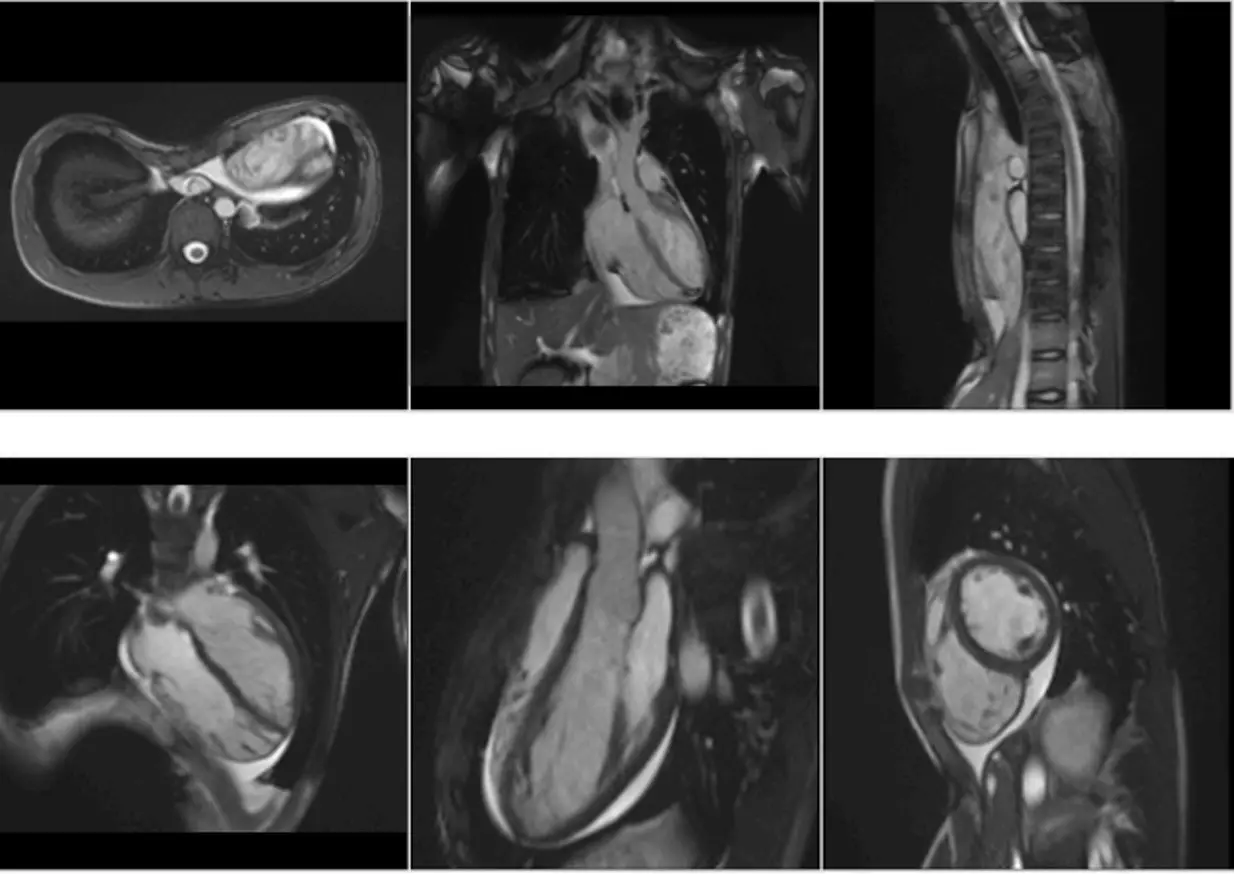
Heart & lung tests where indicated. An echocardiogram, cardiac MRI or lung-function/CPET testing documents any functional effect, particularly in recurrent excavatum.
Anaesthetic review. Every patient is assessed before admission by a consultant anaesthetist, with the pain-management plan agreed in advance.
Planning checklist
What surgery involves
Because every complex or revision case is different, the operation is planned individually rather than following a single set of steps.
It is performed under general anaesthetic. Where there is existing metalwork, this is carefully removed or repositioned first. Scar tissue from previous surgery is divided, the chest wall is re-mobilised, and the deformity corrected using the most suitable technique — a redo bar, an open or hybrid repair, a custom implant, or chest-wall reconstruction. Cryotherapy and regional anaesthesia are used to control pain, and drains are placed as needed.
Revision surgery generally takes longer than a first operation and the steps are adapted as the chest is assessed during the procedure. The full plan, and what it involves for you, is explained clearly beforehand.
Revision surgery for pectus arcuatum
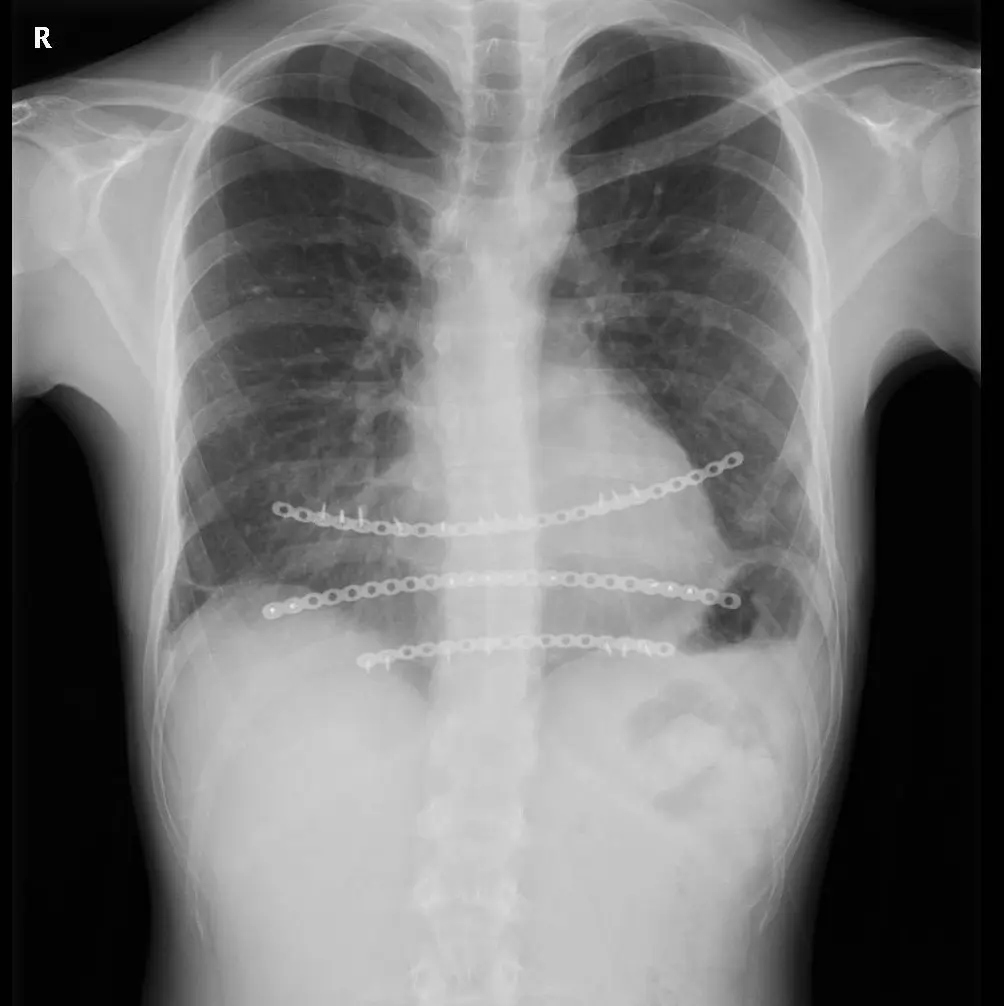
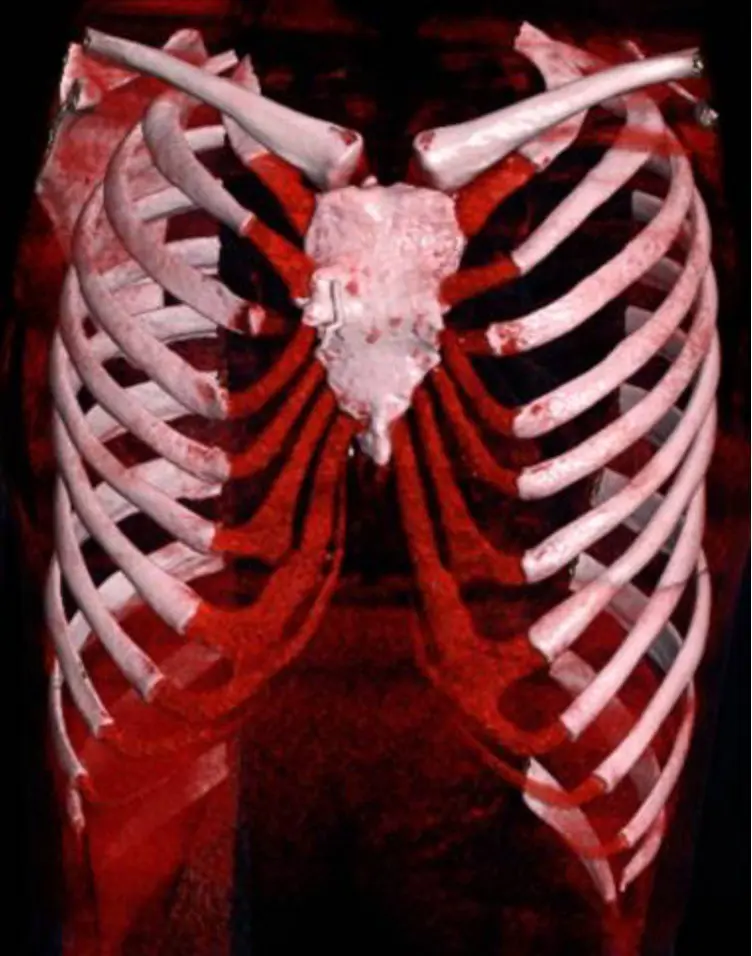
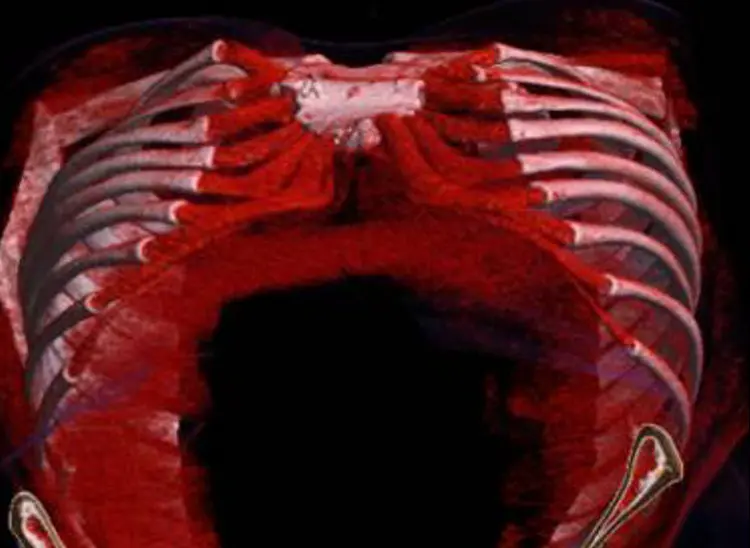
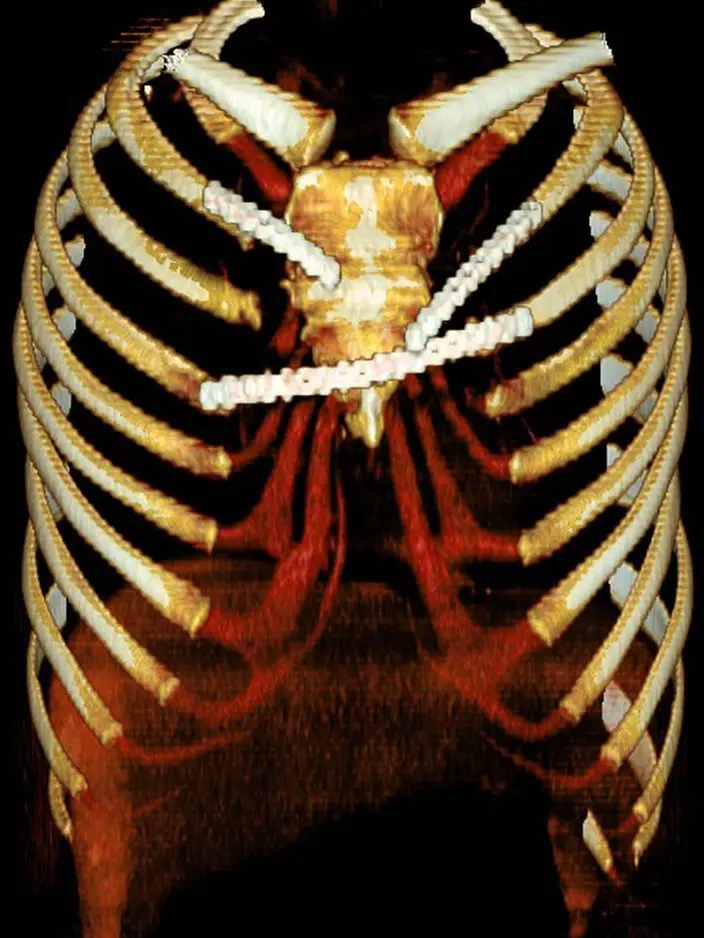
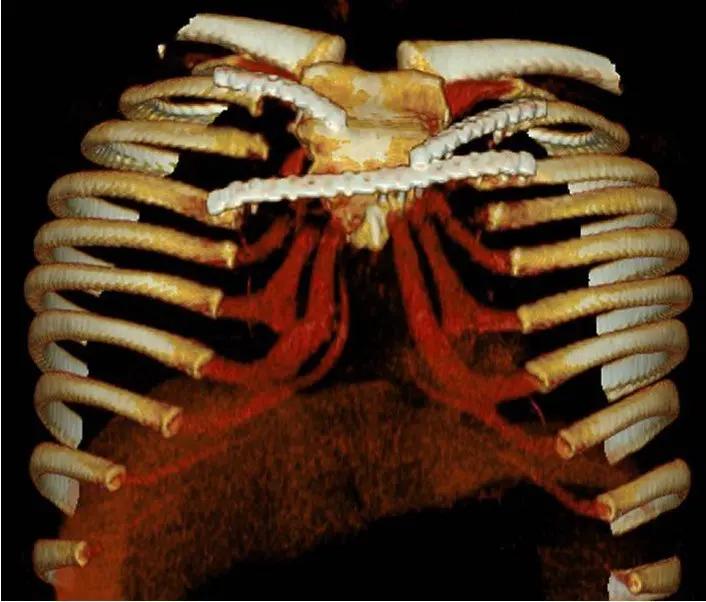
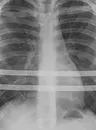
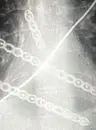
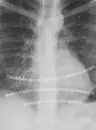
A woman in her late twenties who had undergone several previous operations for pectus arcuatum, leaving a residual, painful deformity. A prominent, clicking area over the right upper chest came from cartilages that had detached and become mobile after the earlier surgery, with a retained sternal wire still in place. She underwent a revision modified Ravitch — reshaping and re-stabilising the chest wall with three titanium plates fixing the cartilages and breastbone. The 3D CT reconstructions below show the deformity before surgery and the corrected, stabilised chest afterwards.
Pectus surgery combined with cardiac surgery
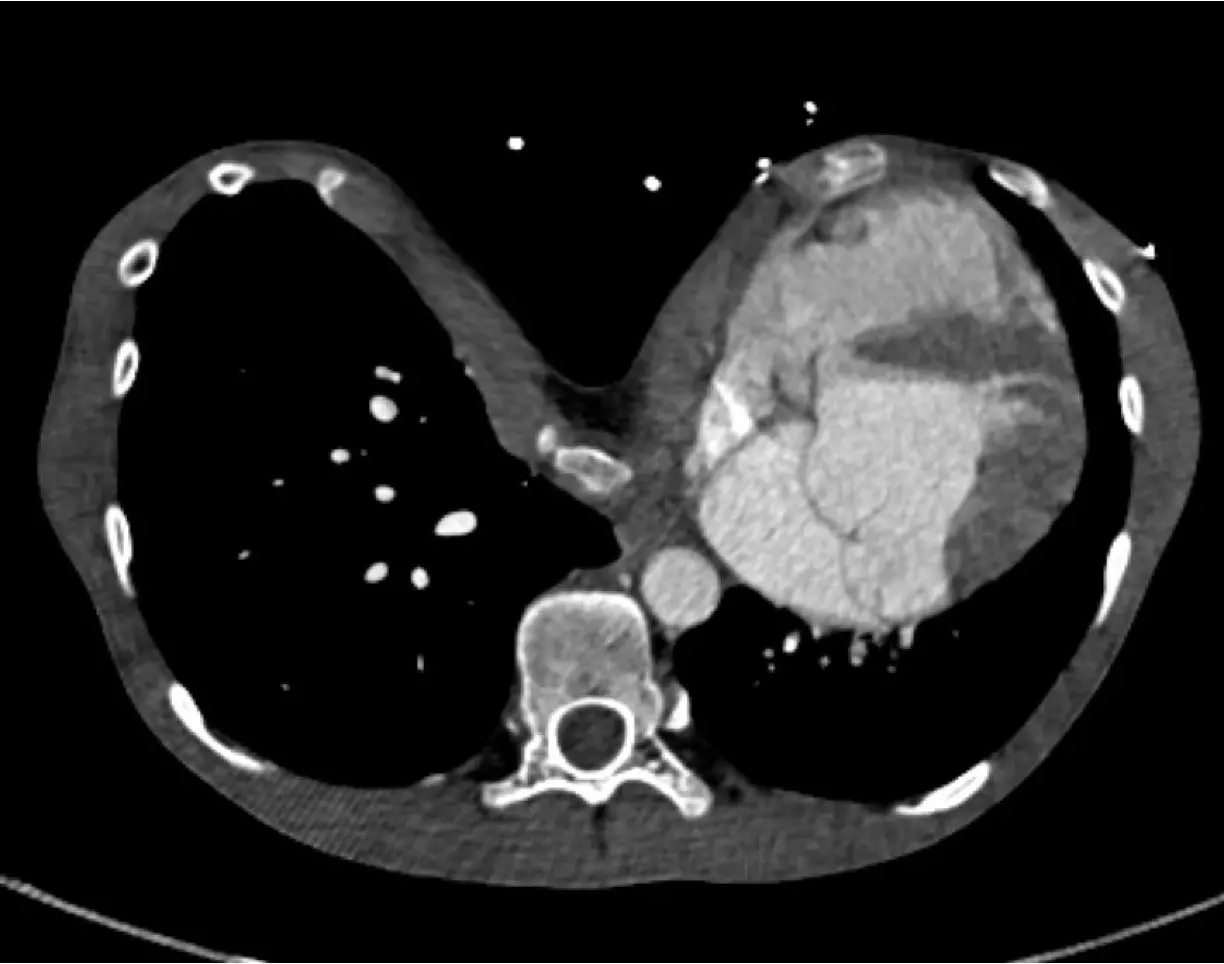
Occasionally a pectus deformity coexists with a heart condition that also needs surgery. In carefully selected cases the chest-wall correction can be carried out at the same time as, or in coordination with, the cardiac operation — a highly complex undertaking, planned jointly with the cardiac team.
One example is a teenager with Marfan syndrome and a severe pectus excavatum together with aortic-root and mitral-valve disease. The deep chest both compressed the heart and made access for the cardiac surgery more challenging, so the two problems were addressed together by the combined surgical team.
These are individualised decisions made only after full assessment, where the benefits of a single combined operation outweigh the considerable risks.
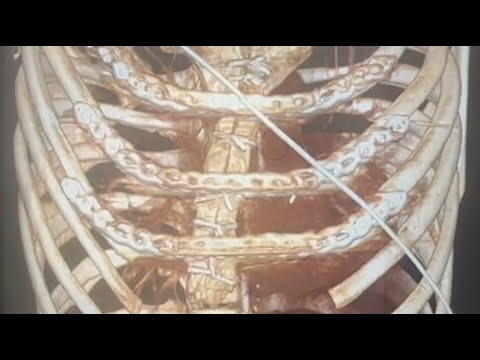
This narrated operative video was produced by Mr Hunt’s valued colleague Mr Joel Dunning. It shows exactly this kind of combined cardiac and chest-wall operation — one Mr Dunning and Mr Hunt carried out together, working side by side with the cardiac team to correct the chest and the heart in a single procedure.
FeaturedCombined cardiac and pectus surgery →
Visit Mr Dunning’s channel →This is an external video hosted on YouTube and contains surgical footage.
Recovery
Recovery depends on the operation performed and is discussed individually. As a guide, it follows the same staged path as the original surgery, but a major revision can be a little slower to settle. The principles below apply to most cases.
Varies with the operation
A chest X-ray confirms the result. Pain is managed with a patient-controlled (PCA) pump, regional anaesthesia and cryotherapy. You are up and walking, with breathing exercises, the day after surgery; drains are removed as they settle. The length of stay depends on the procedure.
At home
Settle & protect
- Sleep on your back; good posture; avoid sudden bending, twisting, heavy lifting and backpacks.
- Walking and deep-breathing exercises from day one.
- Regular painkillers in the first weeks; the chest may feel numb for some months after cryotherapy.
Back towards normal
- Graded return to gentle aerobic exercise from around 6–8 weeks.
- Continue to avoid heavy lifting and contact sport until about 3 months.
Full activity
- Most return to full activity by around 3 months; vigorous and contact sport a little later.
- Where a new bar is placed, it is removed at a later, smaller operation.
Contact the team — or attend A&E if urgent — if you develop: a fever; a persistent cough; worsening chest pain, especially on deep breaths; sudden breathing difficulty; redness, swelling or discharge from the wound; or a sudden change in the shape of your chest with pain.
Risks
Revision and complex surgery carries higher and more variable risks than a first operation. Exact risks depend on the previous procedure, scar tissue, existing metalwork, age, chest-wall rigidity, whether the chest cavity is entered, and whether cardiac, spinal or other specialist teams are involved.
Everything is discussed fully at the consent consultation before any commitment to surgery.
Common & usually minor
- Pain in the first weeks, controlled with planned pain relief and cryotherapy
- Bruising, swelling and a fluid collection under the skin (seroma)
- Temporary numbness of the skin around the scar
Uncommon — and a little more likely in revision
- Bleeding, occasionally needing a drain or return to theatre — scar tissue can make dissection more demanding
- Air or fluid around the lung (pneumothorax or pleural effusion)
- Wound infection — deep infection involving metalwork is uncommon but more relevant when metalwork is re-used
- Displacement of a bar or plate
Rare but serious
- Incomplete correction or a further recurrence — more of a consideration in revision than in first-time surgery
- Persistent pain or an unstable sternum, occasionally needing further surgery
- Injury to the heart or major vessels — extremely rare, with every precaution taken (and particular care where the heart is adherent to previous surgery)
Costs and funding
Funding for complex and revision surgery depends on the deformity and the reason for the operation. Correction of severe pectus excavatum with documented functional symptoms may be funded through private insurance or, in defined cases, the national NHS pectus programme. Carinatum and cosmetic concerns are treated as self-pay. Because every revision is different, a clear individual quotation is always provided.
Only for severe pectus excavatum, through a defined national pathway — pectus carinatum and cosmetic cases are not NHS-funded. NHS England funds surgery for patients with a Haller index above 3.25 on CT, combined with at least one of the following: arrhythmia caused by the pectus; cardiac symptoms such as syncope; evidence of cardiac compression on MRI with circulatory impairment; dysphagia attributed to the deformity; or cardiac or circulatory complications that would prevent necessary surgery for another condition.
That last criterion is clinically important: the NHS pathway specifically includes patients whose pectus excavatum makes necessary cardiac or spinal (scoliosis) surgery unsafe or impractical — for example where prone positioning for spinal surgery is impossible, or where cardiac compression must be relieved before valve or aortic surgery can proceed safely. In these cases, pectus correction may be considered as part of a jointly planned procedure.
Every case must be discussed at a National Pectus MDT — comprising a cardiologist, cardiac surgeon and thoracic surgeon — before NHS funding is confirmed. The number of patients meeting these criteria nationally is small. NHS surgery is performed at commissioned specialist centres; Mr Hunt can assess whether a patient is likely to meet the criteria and support referral into the national pathway where appropriate — this is discussed openly at consultation.
Private medical insurance. Many insurers fund revision surgery where there is documented functional impact or a clear complication of previous surgery. The team is experienced in supporting pre-authorisation applications.
Self-pay. A clear written quotation is provided after consultation, covering surgical, anaesthetic and hospital fees and follow-up. Because complexity varies widely, revision and complex operations are quoted individually; where a bar is used, its later removal is quoted separately.
Complex & revision surgery — FAQs
Yes. Mr Hunt regularly assesses patients whose original surgery was performed by another surgeon, including overseas. Bring any operation notes, imaging and implant details you have — these help plan safely. A fresh CT is usually arranged.
Often, yes. A recurrent or residual deformity can often be improved, but the best approach depends on the previous operation, current chest-wall anatomy, symptoms and risks. Options may include a further bar, an open or hybrid repair, or a custom implant for a residual hollow — decided after full assessment.
It is generally more demanding, because scar tissue and altered anatomy make the surgery more complex, and some risks are a little higher. This is exactly why careful assessment and an experienced surgeon matter. All risks are discussed fully beforehand.
A displaced, prominent or painful bar can be removed or repositioned, and Mr Hunt also removes bars placed elsewhere. Where removing a bar would leave a residual deformity, options to maintain the correction are discussed at the same time.
A specialist second opinion may still be worth seeking. Even where further corrective surgery is not advisable, options such as a custom implant may help — and if surgery genuinely would not improve things, you will be told that honestly.
In carefully selected cases, yes — though it is rarely offered and is highly challenging. Where a chest-wall deformity coexists with a cardiac condition, or with a spinal deformity (scoliosis), correcting the pectus at the same time as, or in coordination with, cardiac or spinal surgery can sometimes be considered. These are complex, individualised decisions made jointly with the cardiac or spinal team after full assessment.
Severe pectus excavatum with documented functional symptoms, or a clear complication of previous surgery, may be covered by private insurance or meet the national NHS pectus pathway. Carinatum and cosmetic cases are generally self-pay. Your situation is explained clearly at consultation.

Discuss a complex or revision case
Suitability is determined at consultation. Send a brief description and photographs — Mr Hunt will review — or book directly.