Custom Pectus
Implant
A custom-made silicone implant placed under the muscle to fill the hollow of a pectus excavatum — restoring a natural chest contour without correcting the breastbone itself. It is a shorter, less invasive operation than the Nuss procedure, well suited to adults whose concern is the appearance of the chest.
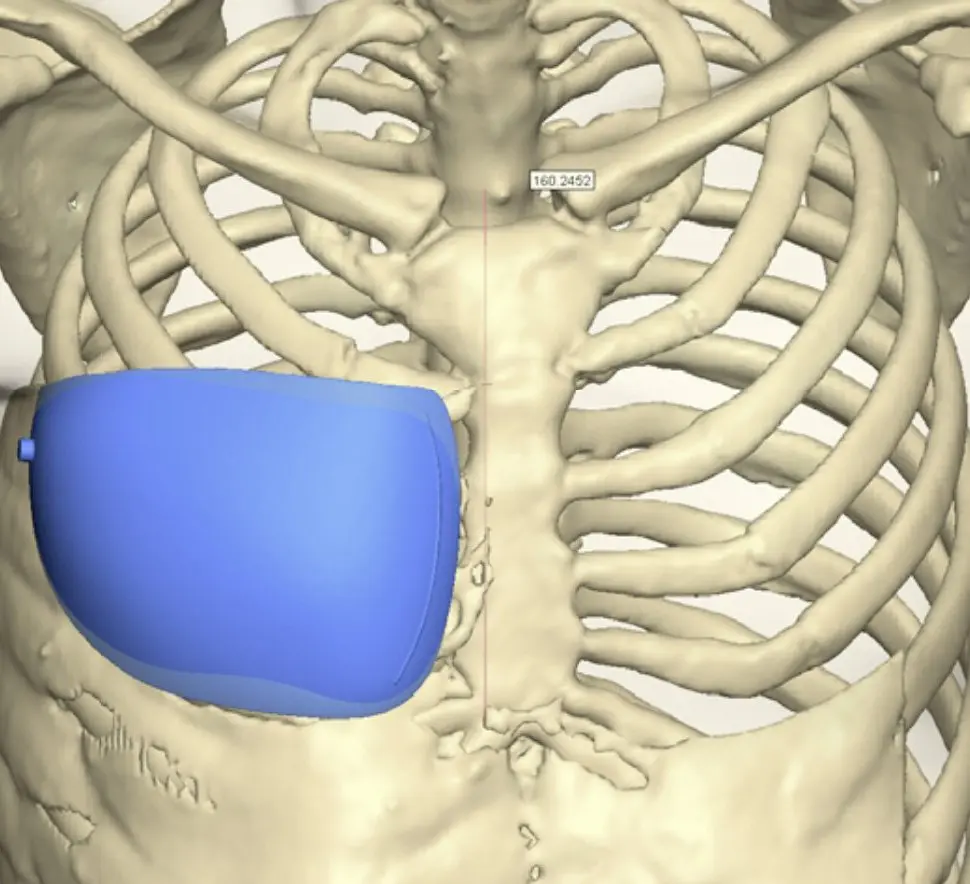
Each implant is designed from the patient’s own CT scan by Anatomik Modeling in France, led by Professor Chavoin. The Pectus Clinic was the first UK group to offer this 3D custom implant.
The custom pectus implant
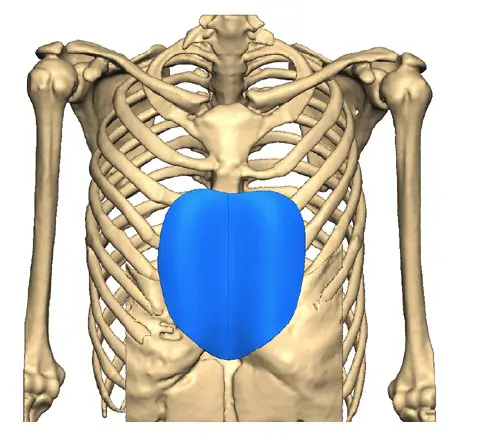
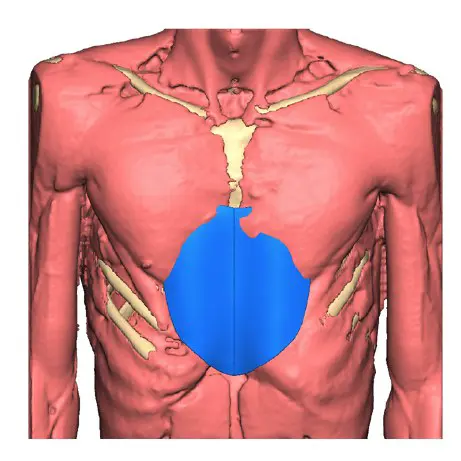
A pectus implant is a non-corrective option for pectus excavatum. Rather than moving the breastbone, a solid, soft silicone implant — custom-made to the exact shape of the hollow — is placed beneath the chest muscles to restore an even, natural contour.
It is best thought of as an intermediate-level operation: it sits between minor and major surgery because the chest cavity is never entered. For the right patient it offers a predictable cosmetic result with much less pain and a shorter recovery than corrective surgery.
It is particularly suited to adults whose main concern is the appearance of the chest, to older patients for whom a Nuss procedure carries more risk, and to those left with a residual hollow after previous corrective surgery.
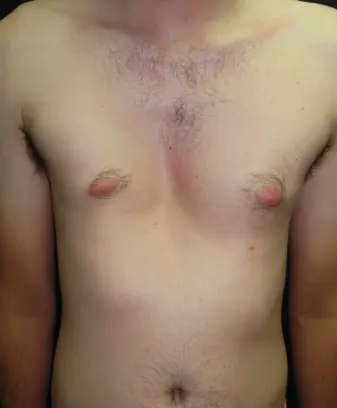
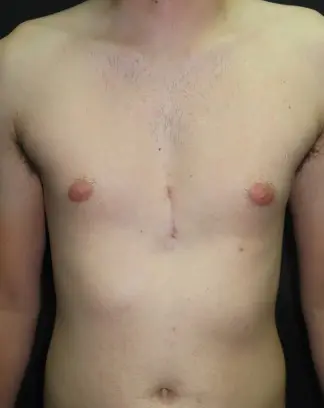
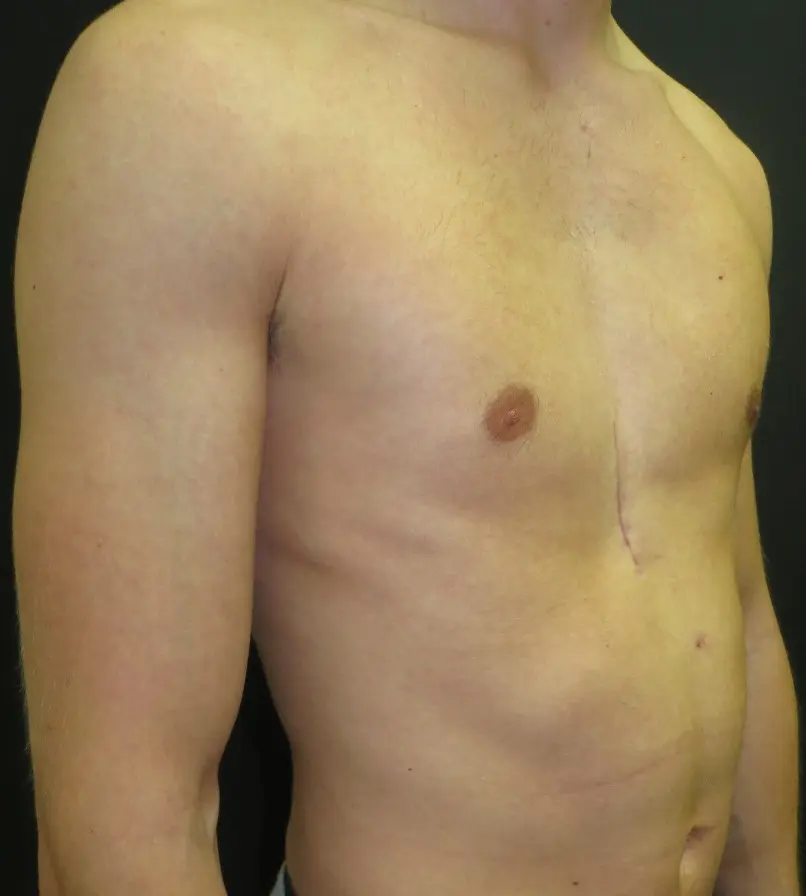
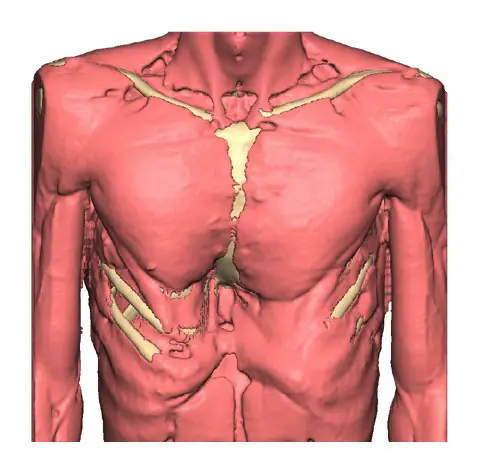
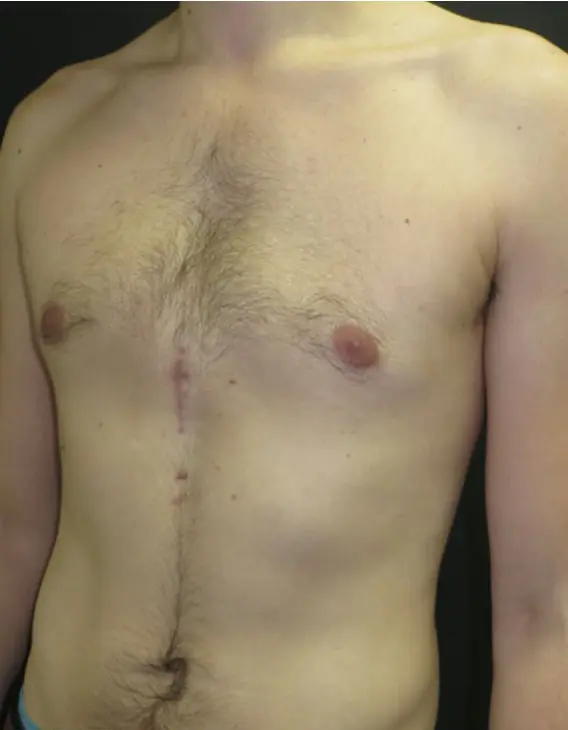
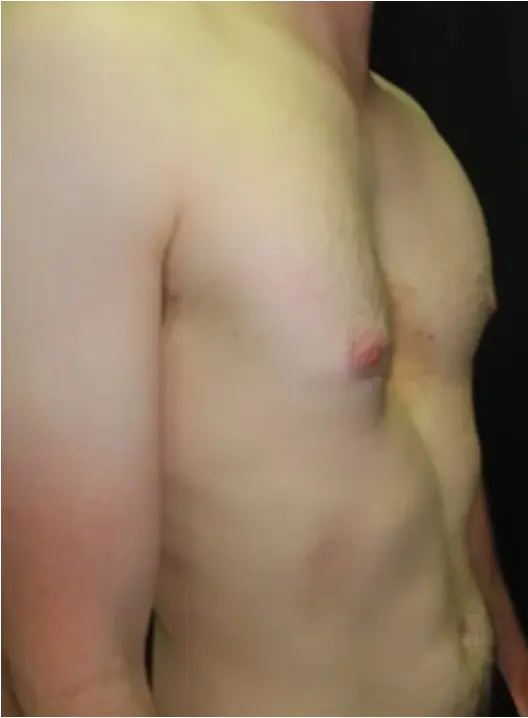
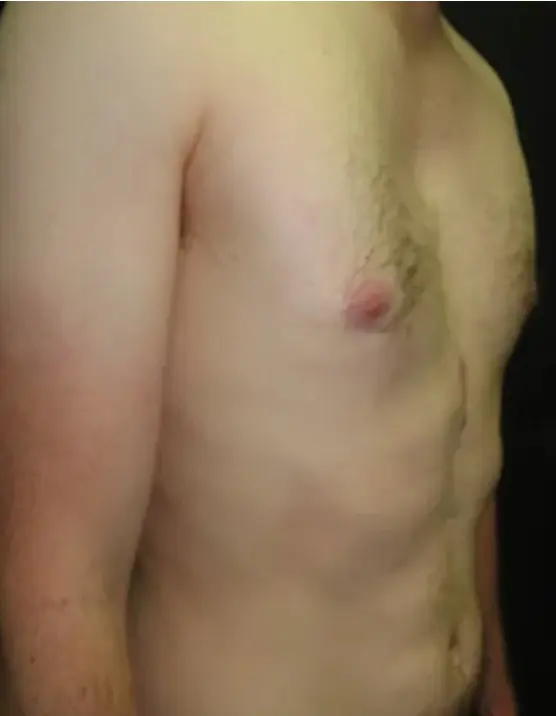
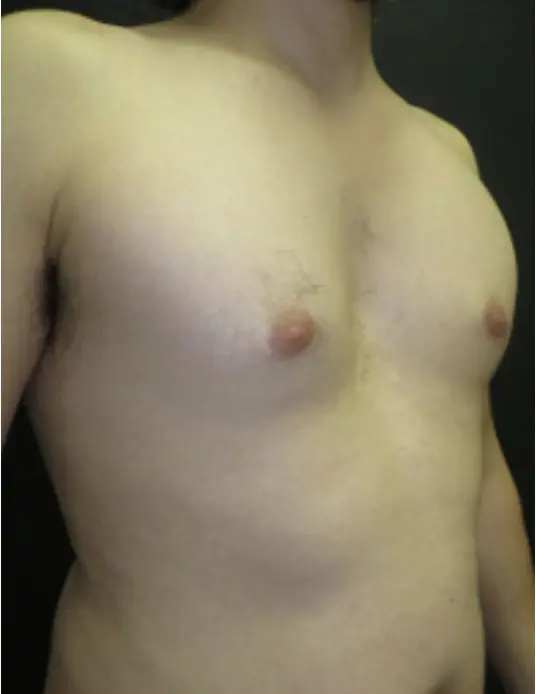
Before, and three months after, a custom pectus implant in a patient who had no physical symptoms but was affected psychologically by the shape of his chest.
At a glance
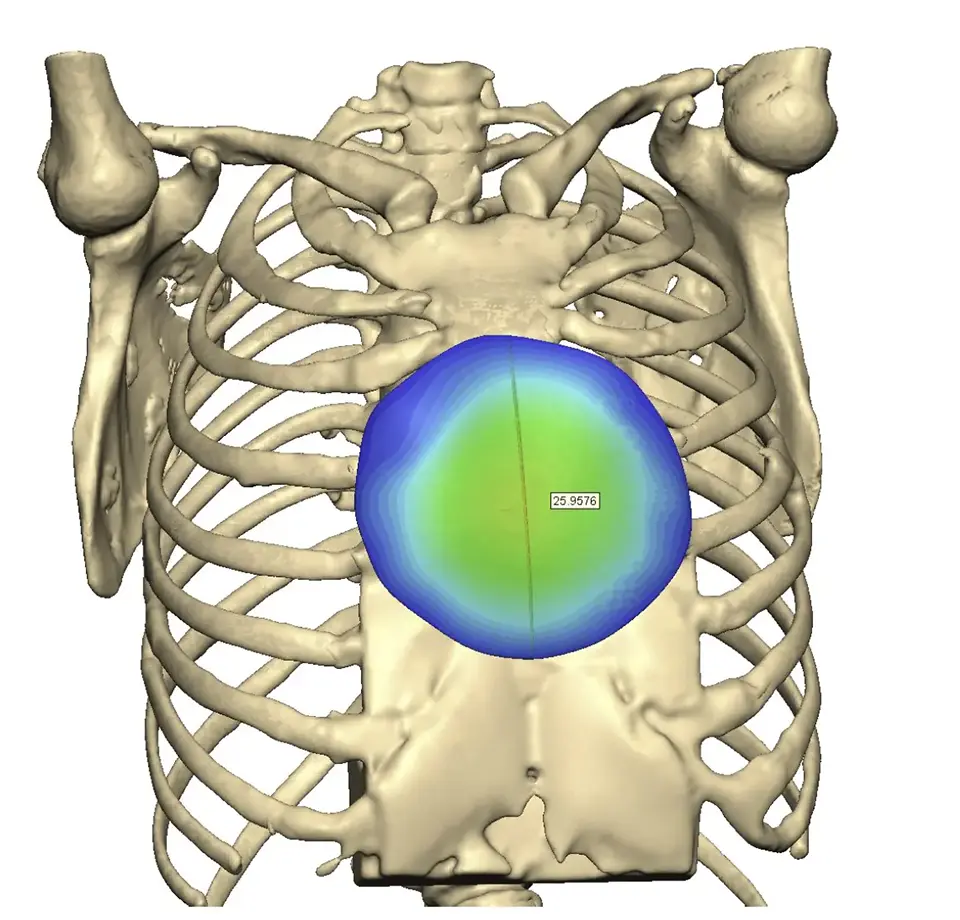
Implants are designed and made by Anatomik Modeling (France) — pioneers of the 3D custom chest-wall implant, working from each patient’s own CT scan.
What the implant is — and why it is safe
The implant is a solid but flexible, soft elastomer made from high-quality, medical-grade silicone, designed as a long-term implant and not routinely replaced.
Unlike a breast implant, it is made from a solid block of silicone rather than a gel-filled shell. This means unlike a gel breast implant it does not contain fluid, so rupture and leakage are not relevant concerns. Capsular contracture — a known complication of gel implants — is not expected with solid silicone, though as with any implant, individual outcomes can vary.
Because it is placed deep to the chest muscles rather than just under the skin, the correction looks and feels natural and the implant is not visible under the skin when moving — a common criticism of the more superficial, non-custom implants used by some non-specialist surgeons.
How the custom implant is made
The 3D custom pectus implant and the surgical technique were developed by Professor Chavoin, a leading French surgeon, and his team. The implant is designed and manufactured by Anatomik Modeling in France; the Pectus Clinic was the first UK group to bring this implant and technique to the UK.
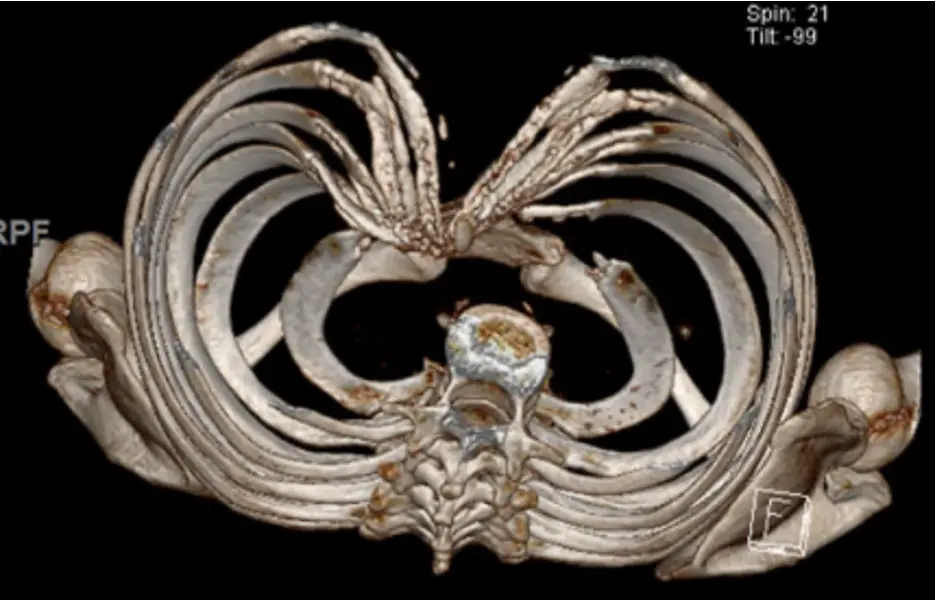
CT scan
A fine-slice CT of the chest with 3D reconstruction captures the precise shape, depth and extent of the hollow.
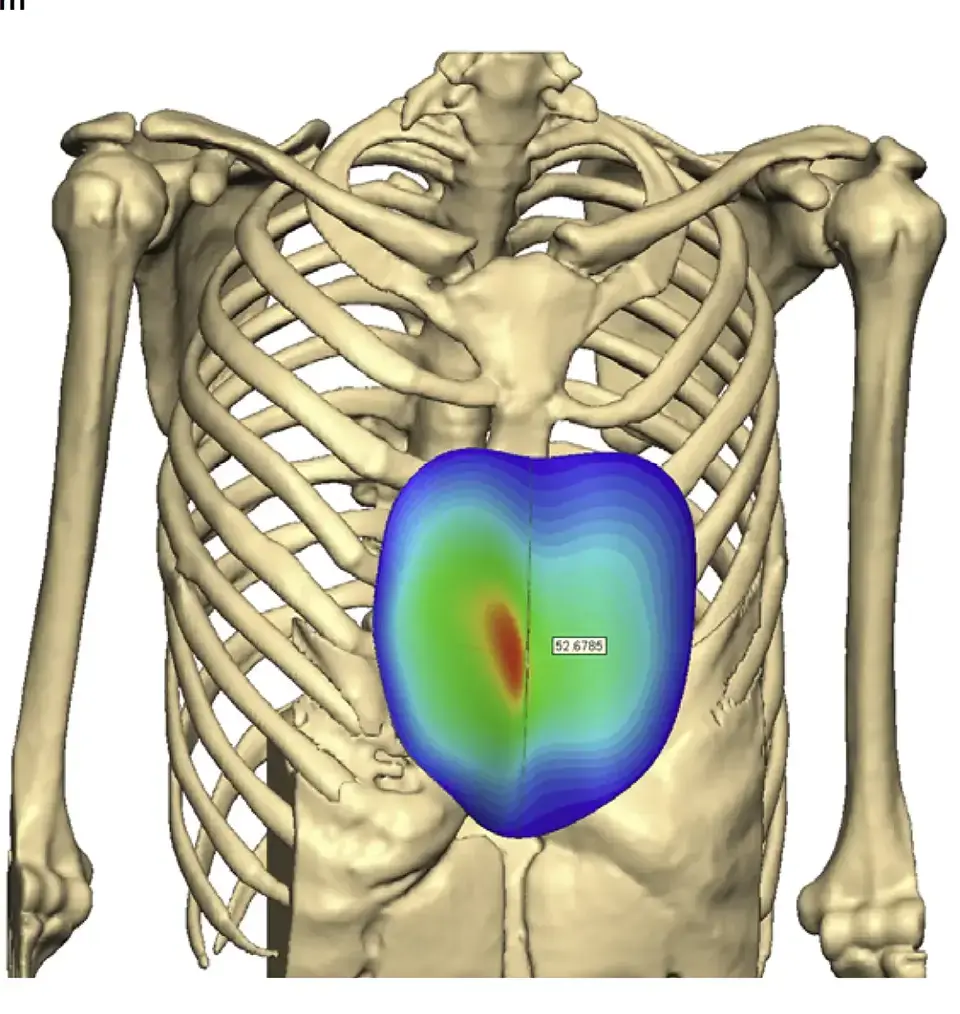
3D design
Anatomik Modeling builds a 3D reconstruction from your scan and designs an implant to fit the deformity exactly. Mr Hunt reviews and validates the design before manufacture.
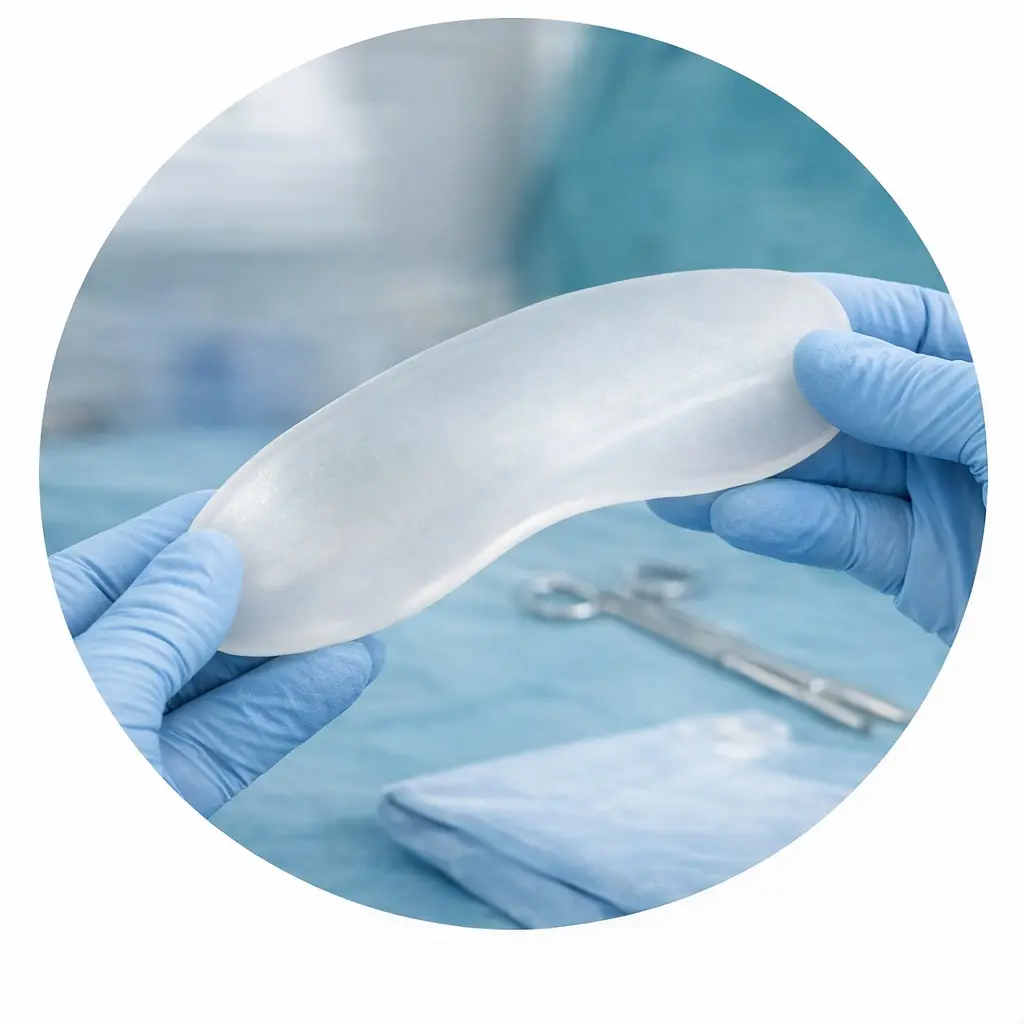
Custom manufacture
The bespoke implant is manufactured in France. The whole process — from CT to a finished implant ready for surgery — takes around 8–12 weeks.
Custom implants for Poland syndrome
The same 3D custom implant is a useful option in selected patients with Poland syndrome — where the pectoral muscle is underdeveloped or absent on one side, leaving the chest visibly flatter and asymmetric.
Designed from the patient’s CT to mirror the normal side, the implant restores a balanced, symmetrical chest contour through the same short, muscle-sparing operation — placed beneath the soft tissues so the result looks natural and is not visible under the skin.
In women with associated breast asymmetry, the implant can be coordinated with breast surgery to optimise the overall result — usually as separate, staged procedures, planned with an experienced cosmetic plastic surgeon.
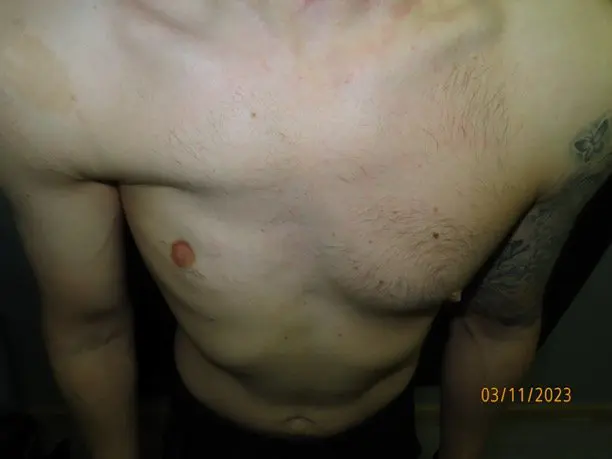
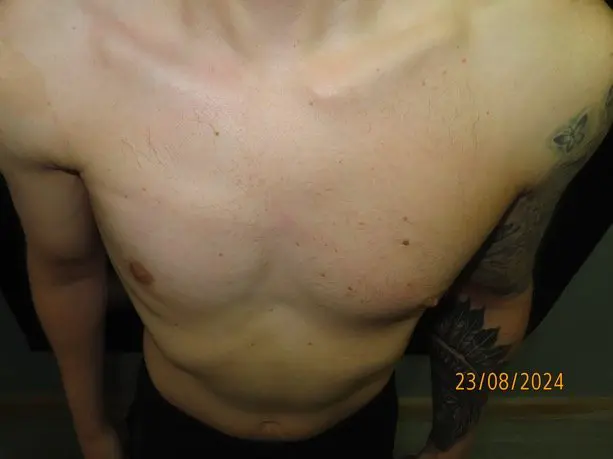
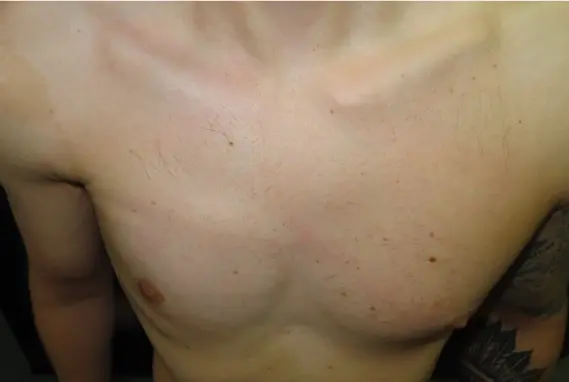
Before and after a custom implant for Poland syndrome — restoring a symmetrical chest contour.
Who is suitable for an implant?
An implant is a positive choice for the right person. Suitability is assessed personally by Mr Hunt, supported by a CT scan and, where needed, heart and lung tests.
✓ Often well suited
- Adults bothered by the appearance of a mild to moderate pectus excavatum
- Patients with no significant heart or lung compromise from the deformity
- Older patients, for whom a Nuss procedure carries greater risk
- Revision surgery — a residual or poor result after a previous Nuss or Ravitch repair, particularly without functional symptoms (a safer option than repeat corrective surgery)
- Selected patients with Poland syndrome or chest-wall asymmetry
- Those wanting a shorter recovery and less pain than corrective surgery
✗ Less appropriate when
- There is significant heart or lung compression — corrective surgery may be needed instead
- The wish is to bring the breastbone itself forward (a corrective Nuss/Ravitch aim)
- The chest is not yet skeletally mature (implants are for adults)
- There is active infection or an unmanaged condition affecting healing
- Metalwork or pectus bars from a previous pectus operation remain in situ
Assessment and planning
Every implant patient has a structured assessment — first to confirm an implant is the right choice, then to design it precisely.
Consultation. Mr Hunt assesses the chest, discusses your goals, and confirms whether an implant or corrective surgery best suits you. A second consultation is arranged once the CT is available.
Medical photography. Standardised clinical photographs are taken to record the starting appearance and allow objective comparison after surgery.
CT scan. A fine-slice CT of the chest (arms by the side) with 3D reconstruction is required — both to confirm suitability and to design the implant. The CT is arranged separately and is an additional cost.
Heart & lung tests where needed. If there are symptoms, an echocardiogram or cardiopulmonary exercise test may be arranged to check the deformity is not causing functional problems that would point towards corrective surgery instead.
Planning checklist
Custom implants for revision surgery
A custom implant is a useful option in selected revision cases — correcting a residual hollow or unsatisfactory result after a previous Nuss or Ravitch repair.
Repeat corrective surgery on a chest that has already been operated on carries significantly higher risks. For a patient who no longer has functional symptoms and whose remaining concern is the shape of the chest, a custom implant is usually a safer, simpler way to complete the correction — filling the residual defect precisely, without re-entering the chest.
As with every implant, it is designed in 3D from the patient’s own CT to fit the exact contour left behind, and placed beneath the muscle for a natural result.
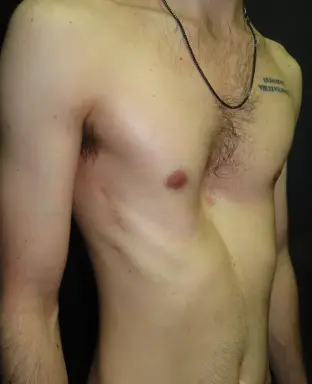
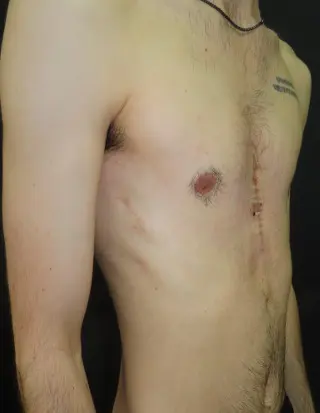
Before and after a custom implant used to correct a residual deformity following previous pectus surgery.
The operation
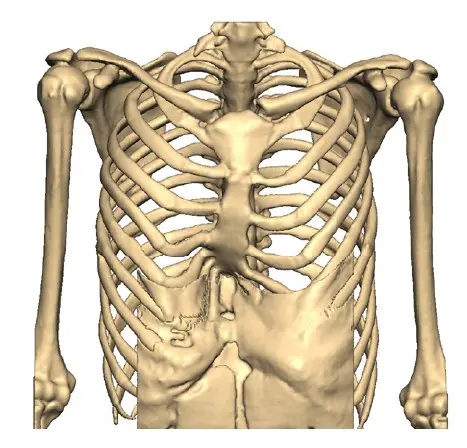
The implant is placed under general anaesthetic. The chest cavity is never opened, which is what makes it an intermediate-level rather than a major operation.
Anaesthetic & preparation
You are admitted on the day of surgery and anaesthetised. Antibiotics are given and the pain plan agreed with the anaesthetist.
Small midline incision
A single vertical incision, about 5–8 cm long, is made over the centre of the chest.
A pocket beneath the muscle
The pectoralis (chest) muscle on each side is gently lifted off the breastbone and ribs to create a precise pocket for the implant — deep to the muscle, so the result looks and feels natural.
Implant placed
The custom implant is positioned into the hollow. Because it is shaped to fit exactly and sits under the muscle, it gives a smooth, natural contour that is not visible beneath the skin.
Closure, drain & dressing
The muscle and soft tissues are closed over the implant. A small redivac drain is placed, a PICO negative-pressure dressing applied, and a compression corset fitted.
Recovery
You are looked after on the ward, given painkillers and antibiotics, and usually discharged the next day with the drain, dressing and corset in place.
How the 3D custom implant works
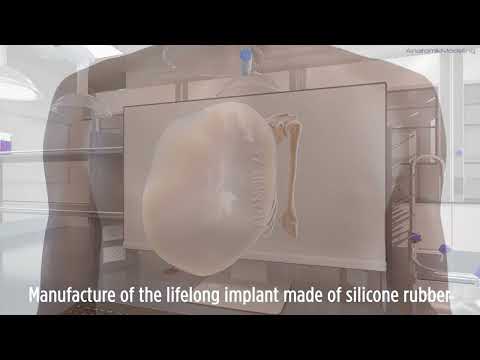
This short animation from Anatomik Modeling — the French company that designs and manufactures the implant — shows how a 3D custom implant is created from a CT scan and used to correct the appearance of a pectus excavatum.
Featured3D custom-made implant for pectus excavatum — Anatomik Modeling →
Visit Anatomik Modeling →Custom implants for pectus arcuatum
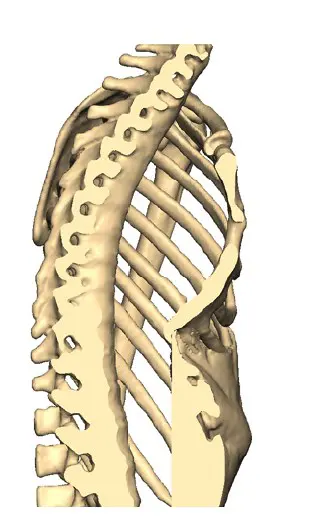
A custom implant is also used for selected pectus arcuatum — a complex deformity where part of the chest protrudes while the areas around it sit hollow, giving an uneven, ridged contour.
Where there are no functional symptoms and the concern is appearance, a custom implant can fill the hollow areas and smooth the contour around the protrusion — a less invasive alternative to corrective surgery. It is designed in 3D from the patient’s own CT and placed beneath the muscle for a natural result.
As with all of these procedures, suitability is confirmed at consultation, with corrective surgery discussed where it would be the better option.
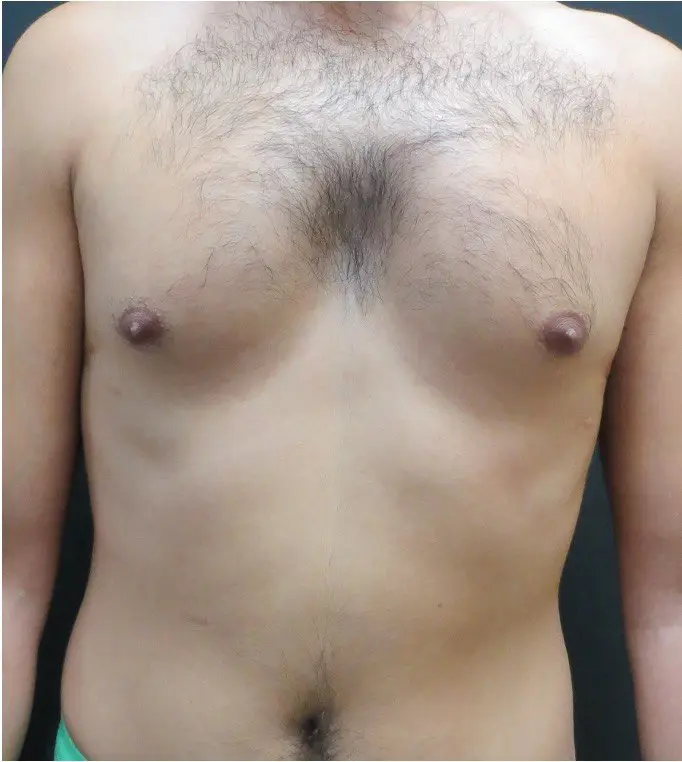
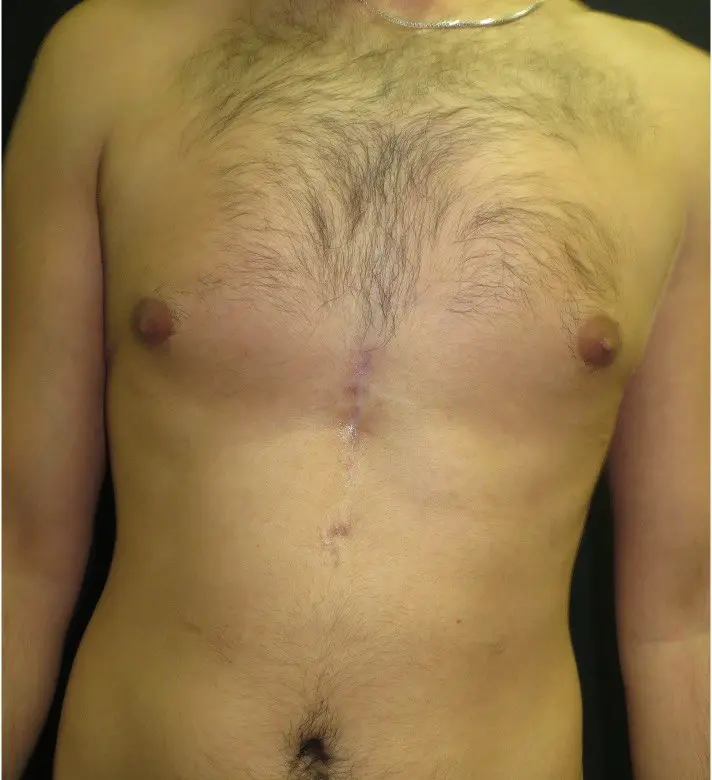
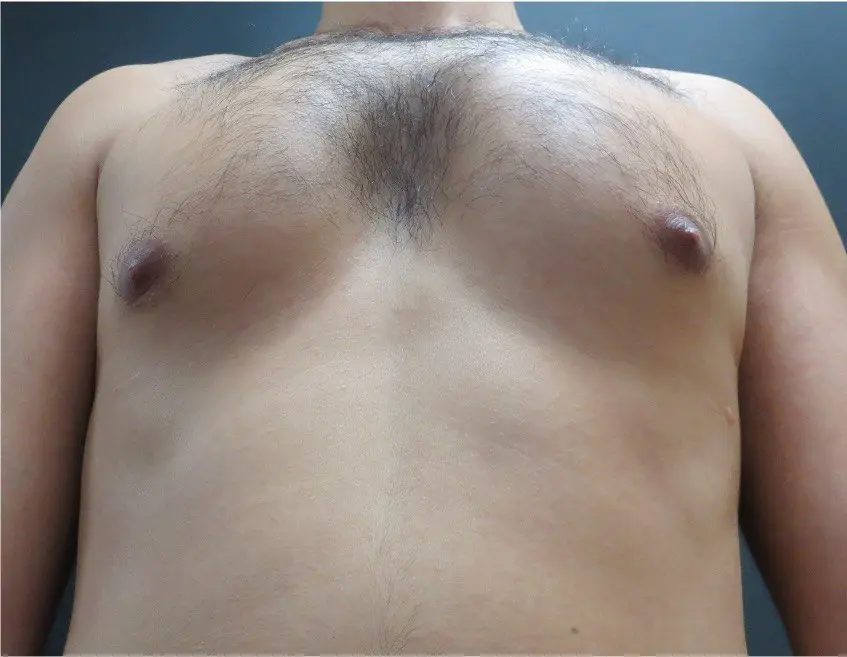
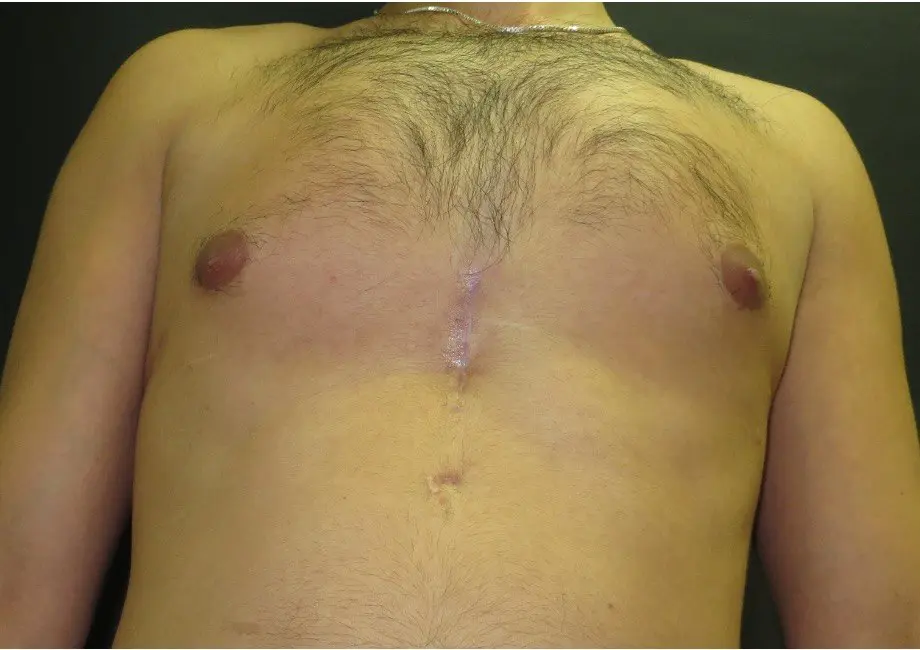
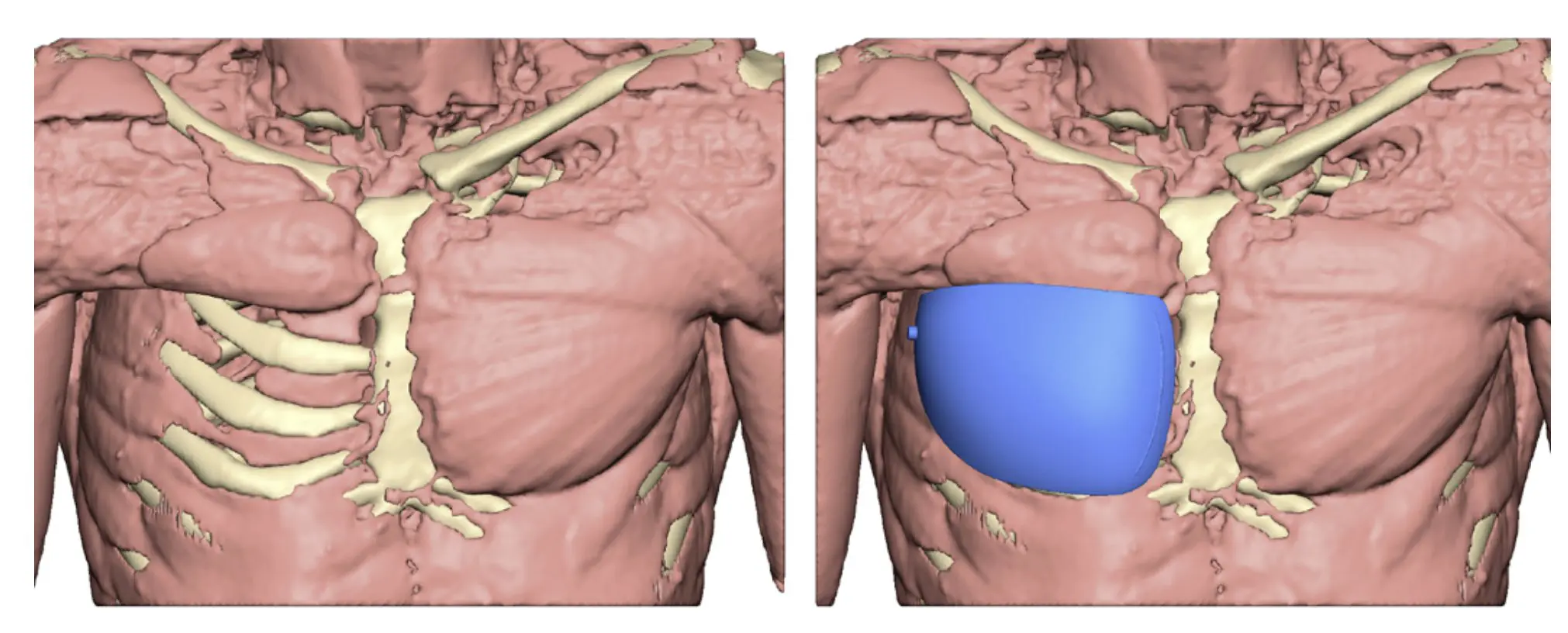
Before and after a custom implant for pectus arcuatum — front view (above) and from below (below).
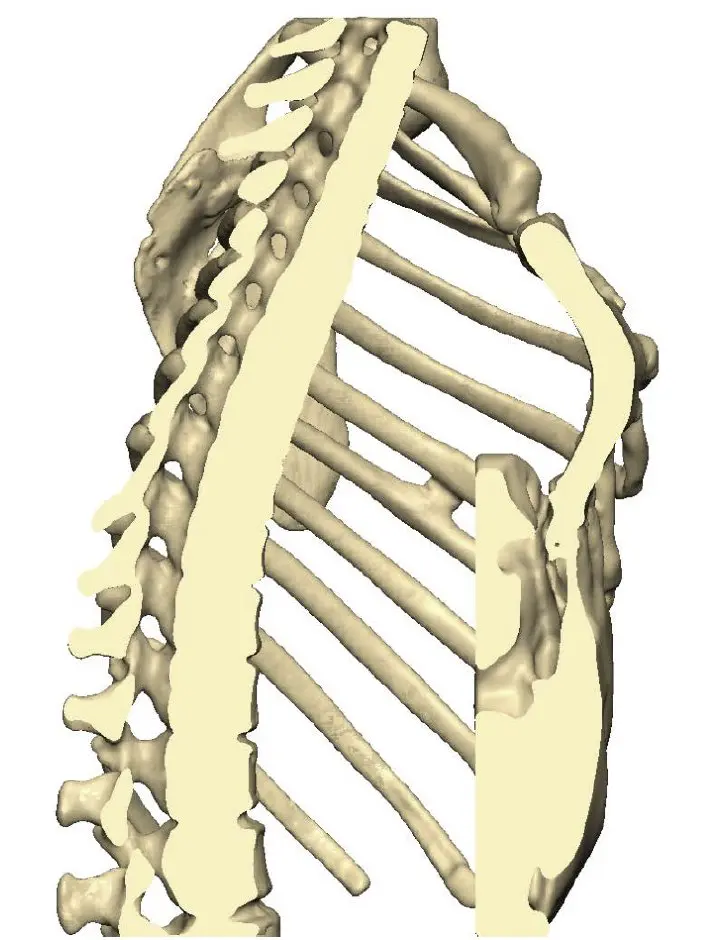
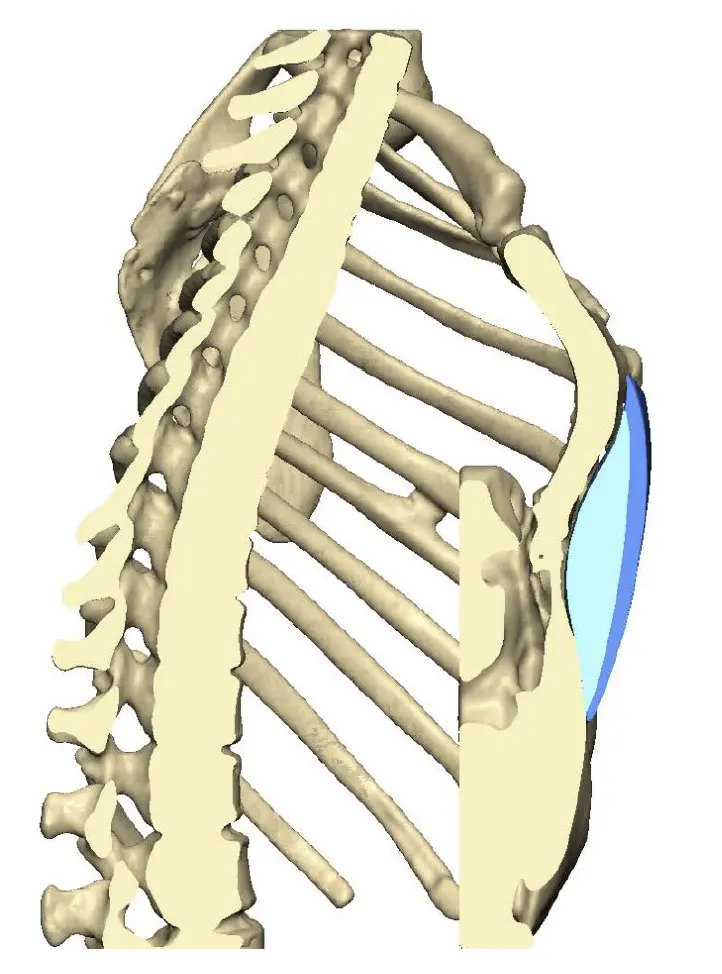
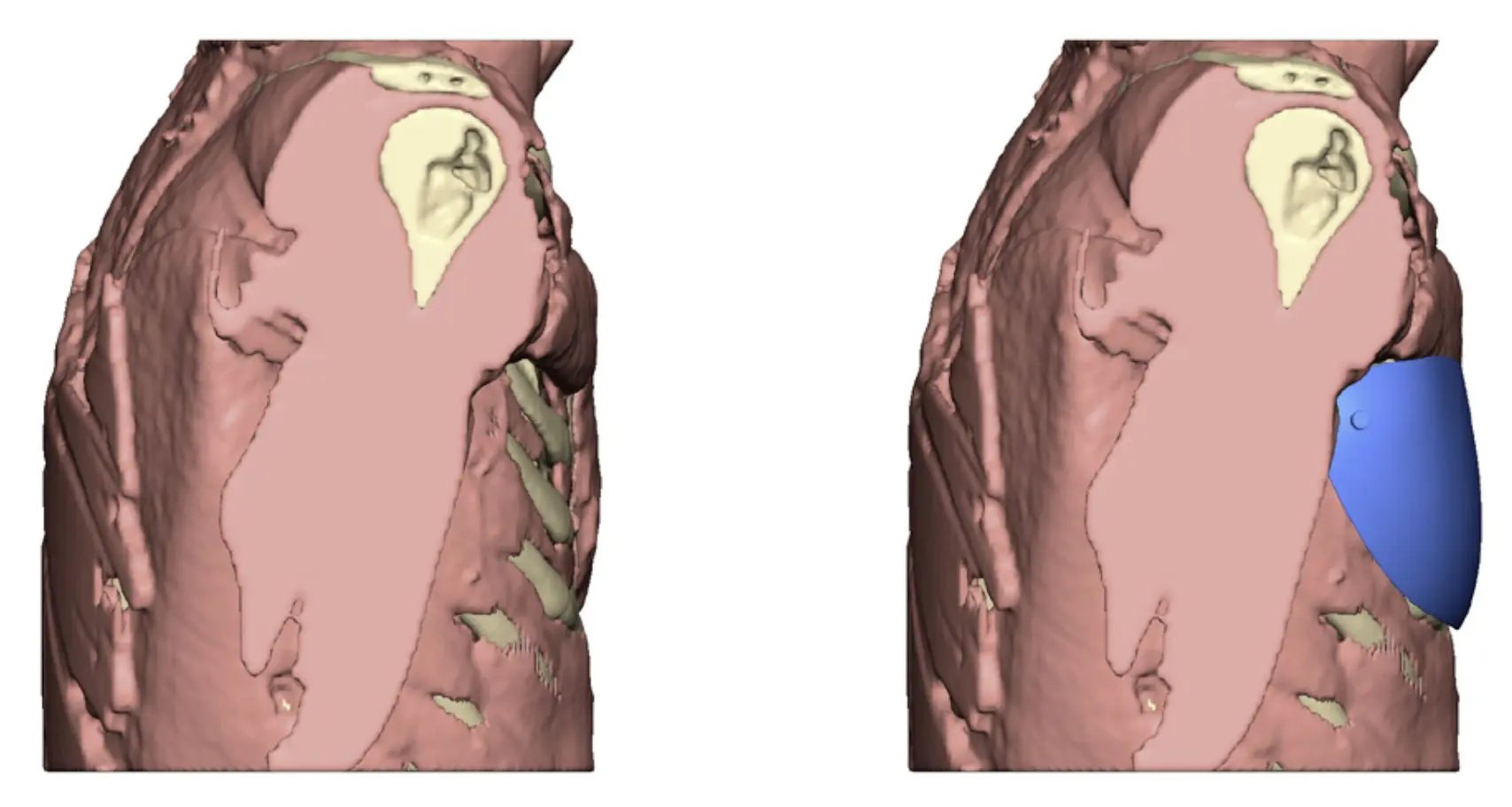
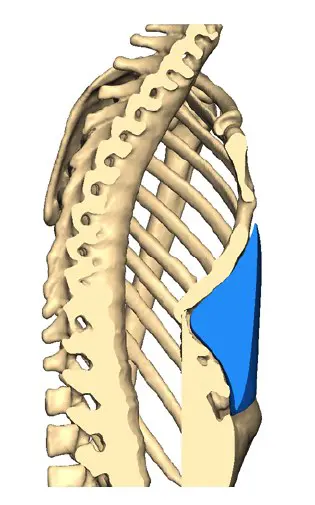
In profile — the chest wall without (left) and with (right) the custom implant.
Recovery after an implant
Recovery is shorter than after corrective surgery, but the early weeks need close follow-up because fluid (seroma) collects around every implant and is managed in clinic. Overall recovery is around 4–6 weeks.
~1 night
Most patients stay a single night and go home the next day with a drain, PICO dressing and compression corset.
At home — the first 12 weeks
Drain, dressing & corset
- Home with a small redivac drain (worn discreetly on a belt or sling), removed about 5–7 days after discharge.
- Wear the compression corset day and night for 3–4 weeks (off briefly to shower), to limit seroma and implant movement.
- Seroma is expected in everyone — drained in clinic, usually twice weekly for 2–4 weeks.
- Off office-based work or college for about 5–10 days; simple over-the-counter painkillers usually suffice.
- No lifting, pushing, pulling or twisting; support the chest when coughing.
Back towards normal
- Most normal daily activity has resumed by 4–6 weeks.
- Light and aerobic exercise is generally fine after the first four to six weeks, guided at follow-up.
- Avoid heavy chest exercises (such as bench press) for about 12 weeks; when you do return to chest-building exercise, build back up slowly and steadily.
Review & settle
- A review at around 3 months once the seroma has settled.
- Further reviews up to 12 months as needed, then discharge.
- Some chest numbness and minor swelling can take several months to settle fully.
Risks and complications
This is a minor-to-intermediate operation and, in fit patients, the risk of a serious complication is very low. The points below are grouped by how often they occur; all are discussed openly at the consent consultation.
Expected / common
- Seroma — fluid around the implant occurs in every patient and is drained in clinic over the first 2–4 weeks
- Bruising and swelling — bruising settles in 2–3 weeks; some swelling can last months
- Numbness around the wound and chest — usually recovers over a few months
- Pectoral muscle ‘twitching’ — a normal effect of how the muscles are repaired; harmless
Uncommon
- Haematoma (bleeding around the implant) — rare; occasionally needs drainage or a return to theatre
- Wound healing problems or partial wound opening — usually after too much early activity or coughing
- Pectoralis muscle separation (dehiscence) — can cause an odd muscle movement on contraction
- Scar that heals less neatly than hoped (wide, thickened or, rarely, keloid)
Rare but serious
- Implant infection — the most significant complication; usually means the implant must be removed and treated, leaving the deformity uncorrected until it can be revisited
- Malposition or movement of the implant — rare, because it is custom-fitted and placed deep to the muscle
Results of pectus implants
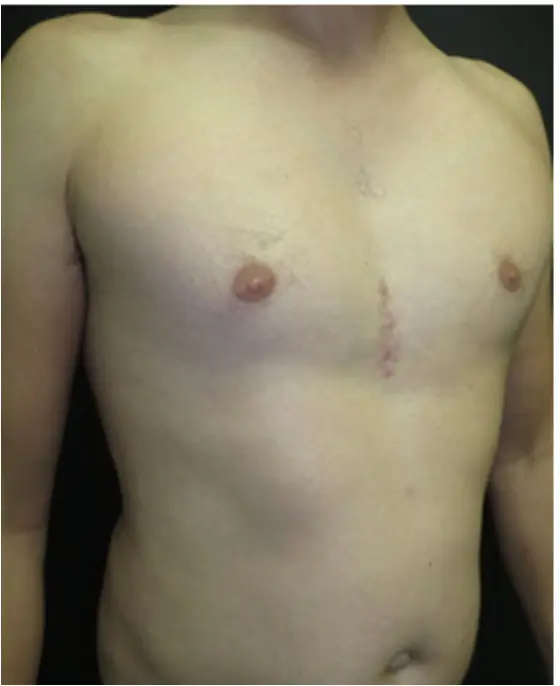
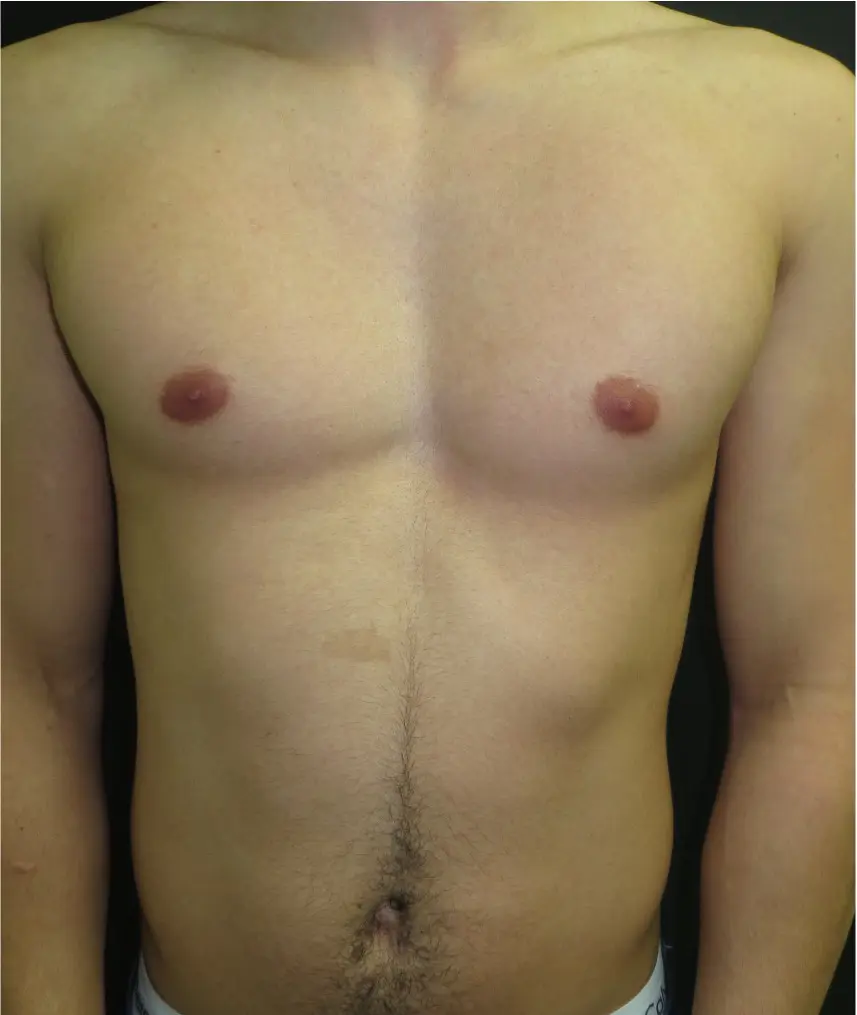
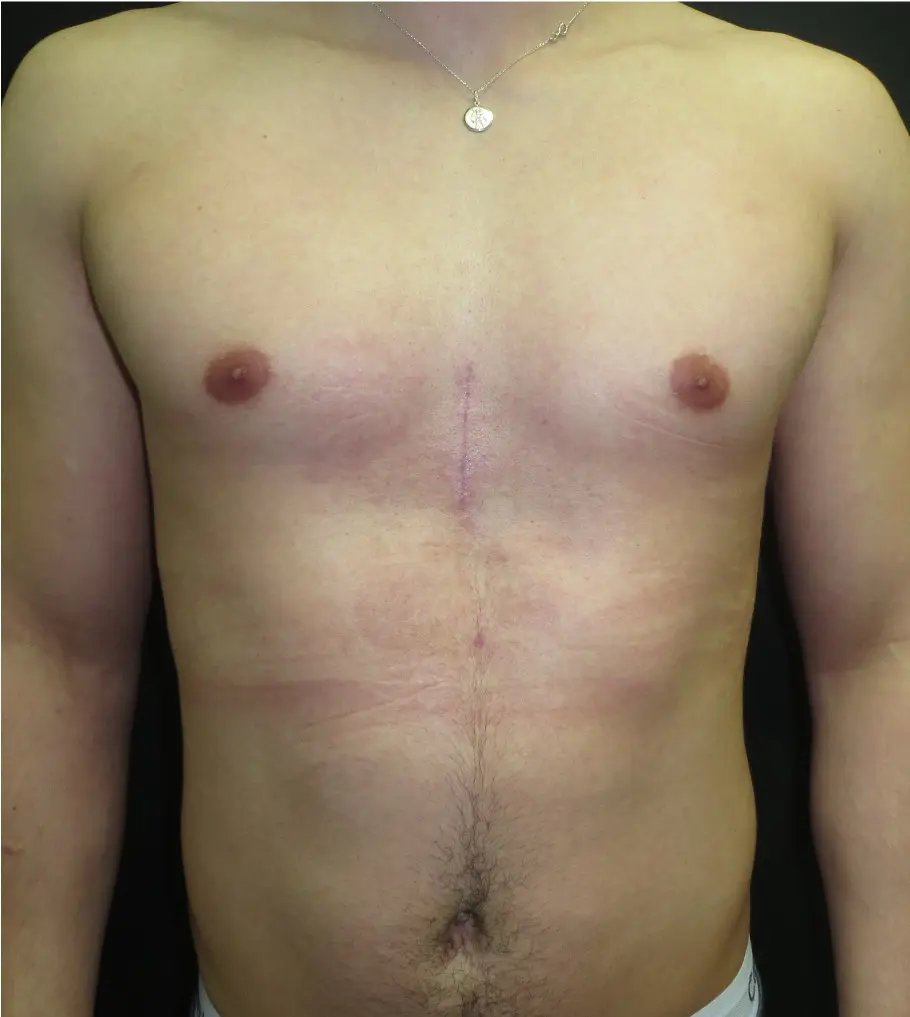
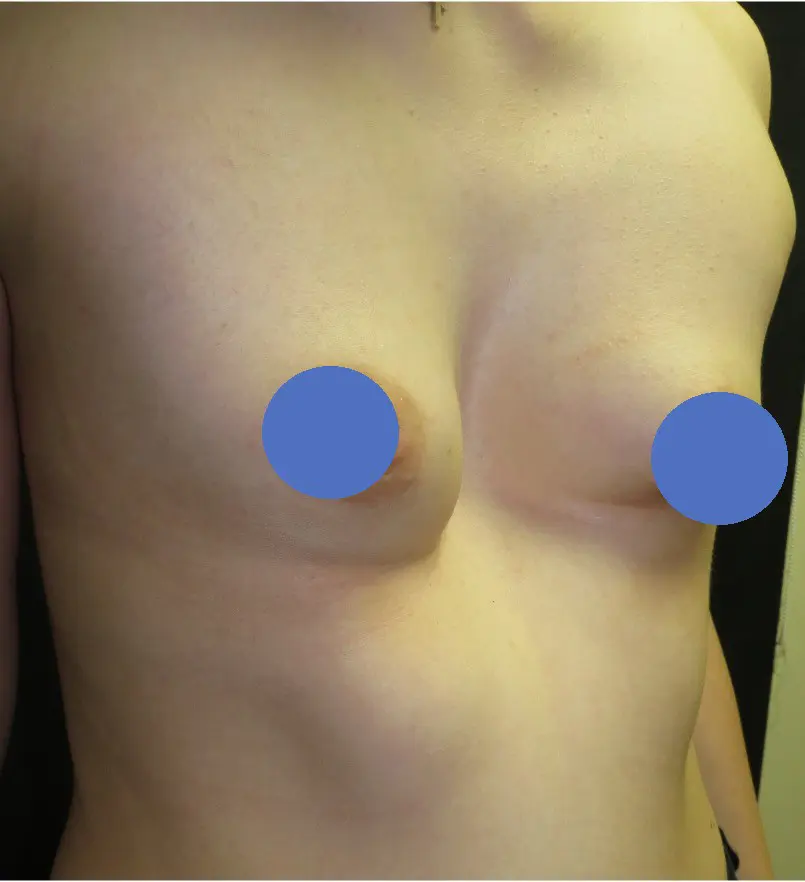
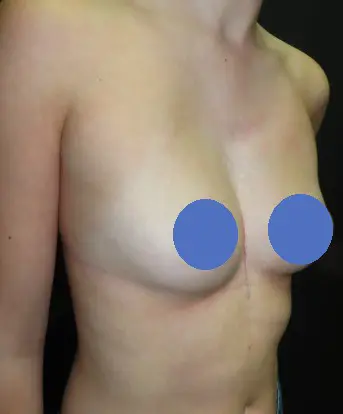
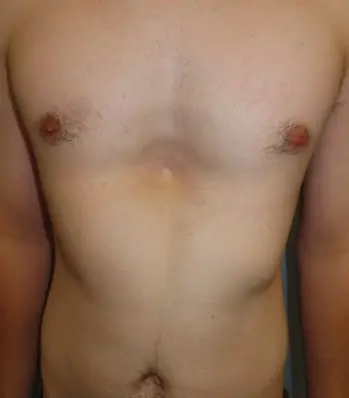
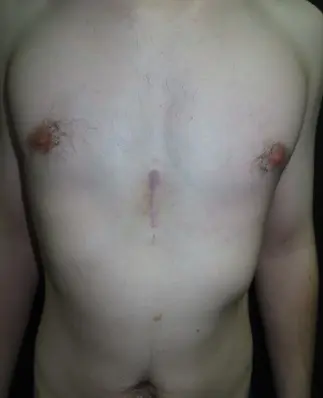
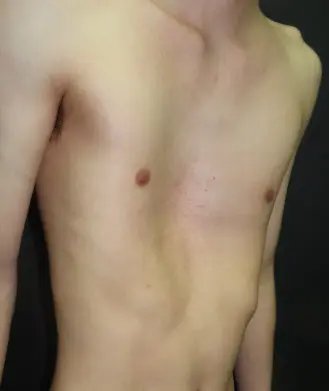
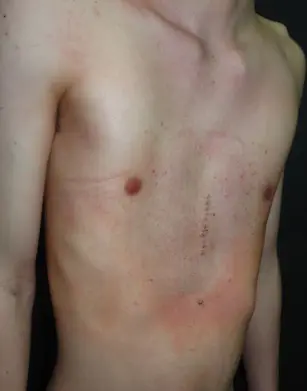
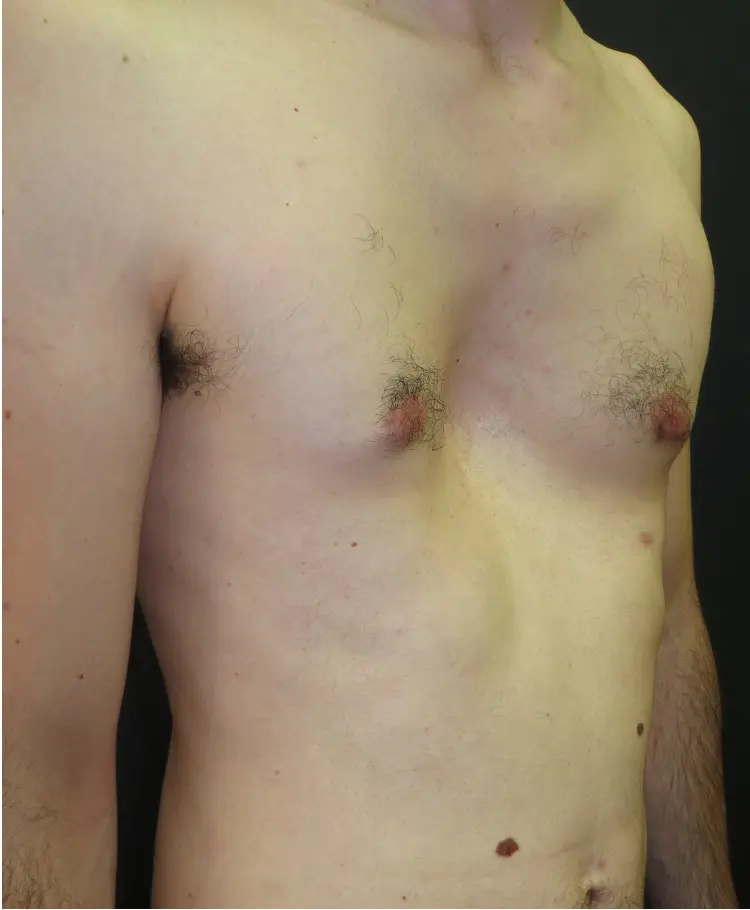
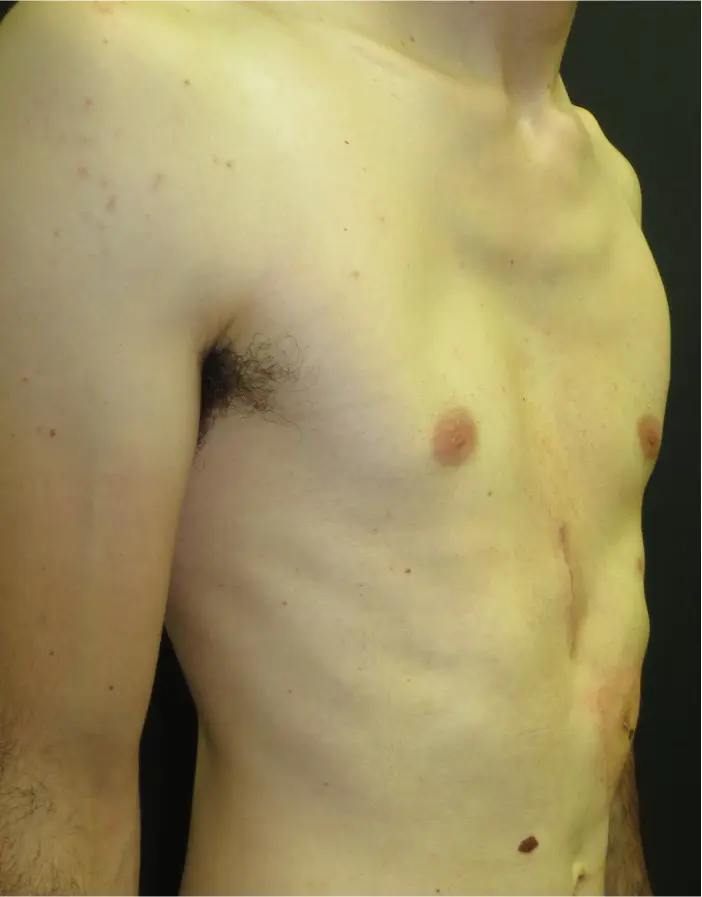
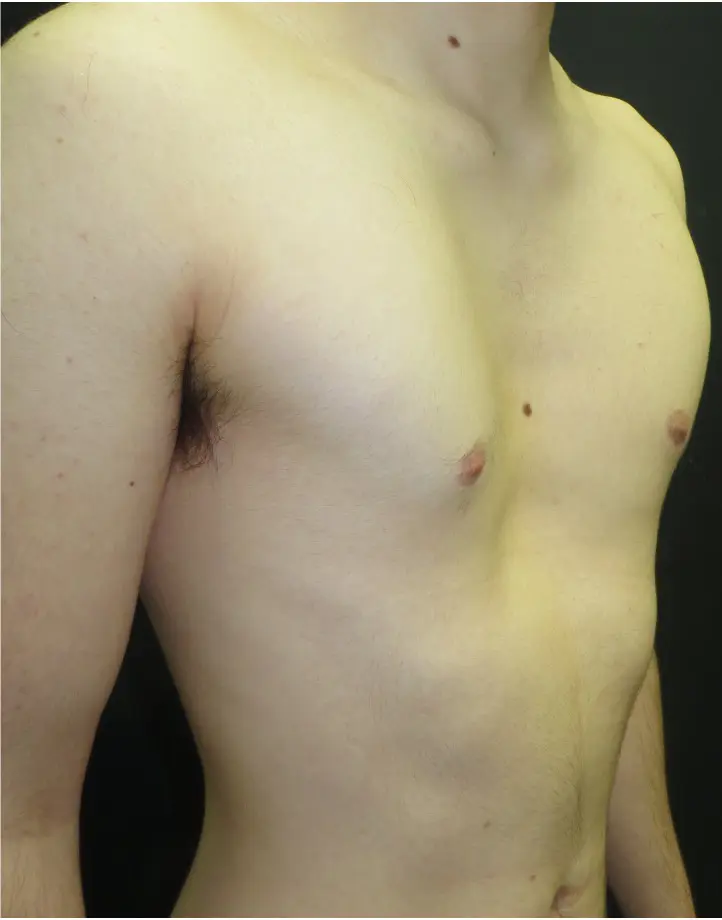
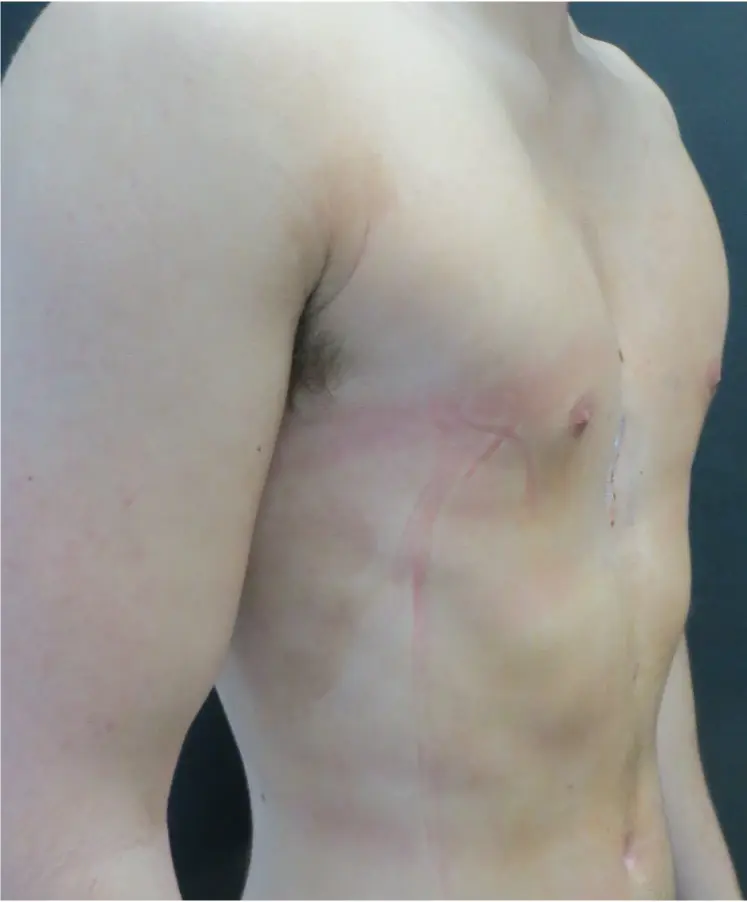
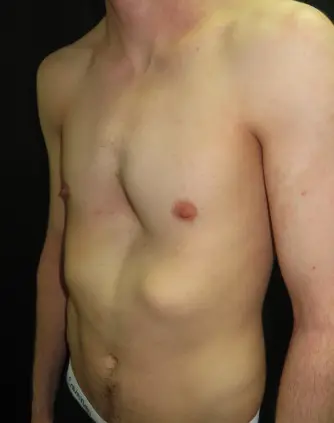
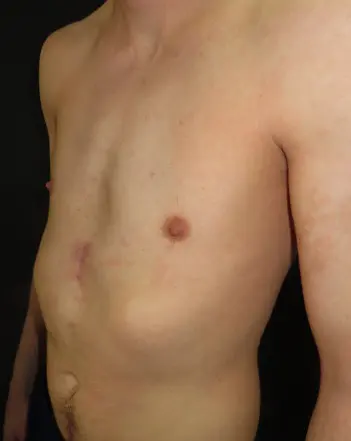
Custom 3D implants give a predictable, natural-looking correction of the chest contour with a relatively minor operation. For well-selected patients, satisfaction is high.
Before & after
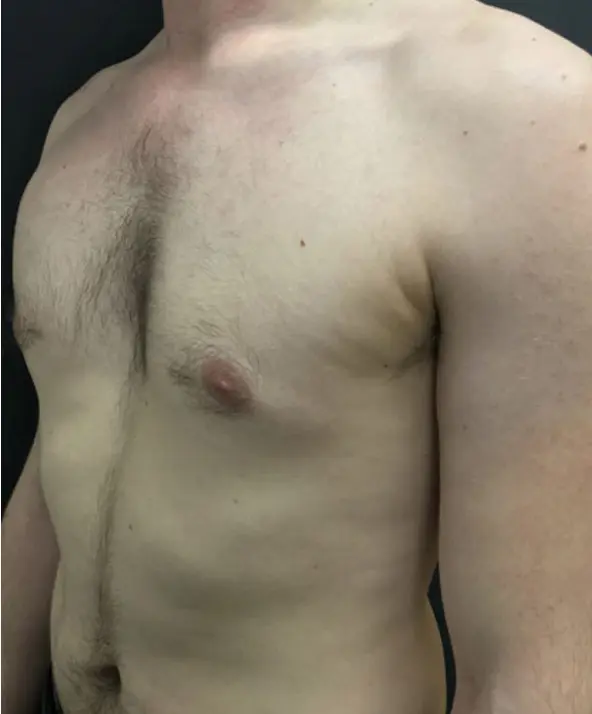
Photographs of Pectus Clinic implant patients, shared with consent for educational and clinical illustration. Results reflect individual cases — outcomes vary and are discussed at consultation.
 Before
 After
After
 Before
 After
After
 Before
 After
After
 Before
 After
After
 Before
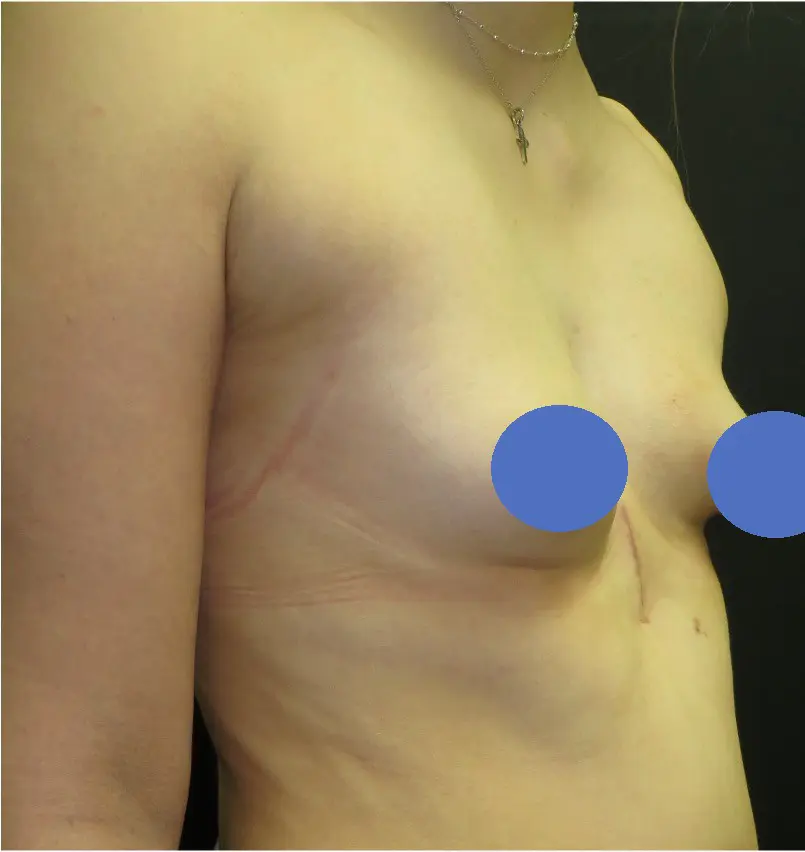 After
After
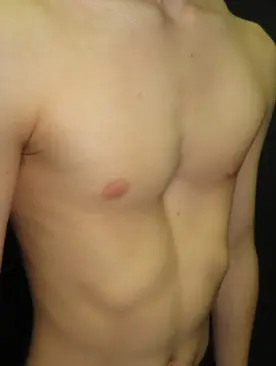 Before
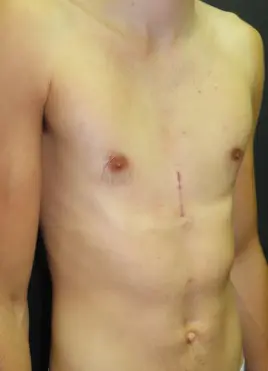 After
After
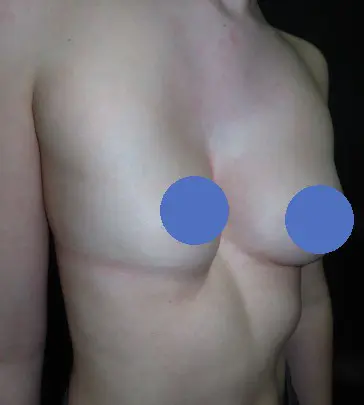 Before
 After
After
 Before
 After
After
 Before
 After
After
 Before
 After
After
 Before
 After
After
 Before
 After
After
Costs and funding
The custom pectus implant is a self-pay procedure. Because it is a contour (cosmetic) operation rather than treatment of a functional problem, it is not covered by private medical insurance.
The surgical package includes all hospital, surgical and anaesthetic fees, and covers every follow-up appointment and any tests or X-rays needed in the first year — including the twice-weekly seroma reviews in the early weeks and reviews up to 12 months. A separate implant deposit places the custom order, and the planning CT is arranged and billed separately by the scanning facility.
A full written quotation is provided before any commitment. Indicative figures are below; current package prices are always confirmed at consultation.
Indicative fees
Figures are indicative and subject to confirmation. Hospital package fees are handled by Spire St Anthony’s.
Pectus implant — FAQs
It is an intermediate-level operation — between minor and major surgery — because the chest cavity is never entered. The implant fills the hollow rather than moving the breastbone, so there is much less pain and a shorter recovery than a Nuss procedure.
It depends mainly on whether you want the deformity itself corrected and whether it causes symptoms. If your pectus excavatum causes functional problems, or you want the breastbone brought forward, a Nuss procedure may be more appropriate. If there are no functional problems and the concern is appearance — or where a Nuss carries greater risk, such as in older patients or after previous surgery — an implant is often the better choice. Cardiac and respiratory tests help guide the decision, which is made together at consultation.
No. It is a solid block of medical-grade silicone designed as a long-term implant and not routinely replaced. Unlike a gel breast implant it does not contain fluid, so rupture and leakage are not relevant concerns; capsular contracture is not expected with solid silicone, though individual outcomes vary. Routine replacement is not needed in the absence of complications.
It is placed deep to the chest muscles and custom-shaped to your chest, so it gives a natural contour and is not visible under the skin when you move. Movement or malposition is a rare long-term problem for this reason.
The implant is placed through a single vertical incision in the midline of the chest, about 5–8 cm long. As with any scar it is permanent and its final look varies between people, but it is positioned centrally and usually settles well over the months after surgery.
Fluid (seroma) collects around every implant in the early weeks. It is drained in clinic, usually twice weekly for 2–4 weeks, and a compression corset is worn to reduce it. Once it settles, no further frequent visits are needed.
Recovery is around 4–6 weeks. Most people take 5–10 days off office-based work or college (longer for very physical jobs) and need only simple over-the-counter painkillers. Avoid sport and strenuous exercise for the first four weeks; light or aerobic exercise is usually fine after that. If weight training matters to you, avoid heavy chest exercises such as the bench press for about 12 weeks while the chest muscles heal.
About 8–12 weeks. The implant is custom-designed from your CT and manufactured in France, so this lead time is built into the planning of your surgery date.
Sometimes. Partial corrective surgery can be combined with an implant to optimise the cosmetic result in selected cases, and for women with breast asymmetry the implant can be coordinated with breast augmentation — though these are usually staged as separate procedures. This is discussed at consultation.
No. The implant is a contour procedure and is self-pay only; private medical insurance cannot be used towards it. A clear written quotation is provided before you commit.
Ideally, but it is not essential — you can refer yourself for a consultation. Some insurers require a GP referral before authorising a specialist consultation, so check your policy if relevant.
Find out if an implant is right for you
Suitability is determined at consultation. Send a brief description and photographs — Mr Hunt will review — or book directly.