
Pectus, Posture & Physiotherapy
Chest wall deformities frequently affect posture, breathing pattern and upper body alignment. A structured physiotherapy and exercise programme is an important part of the non-surgical pathway for many patients.
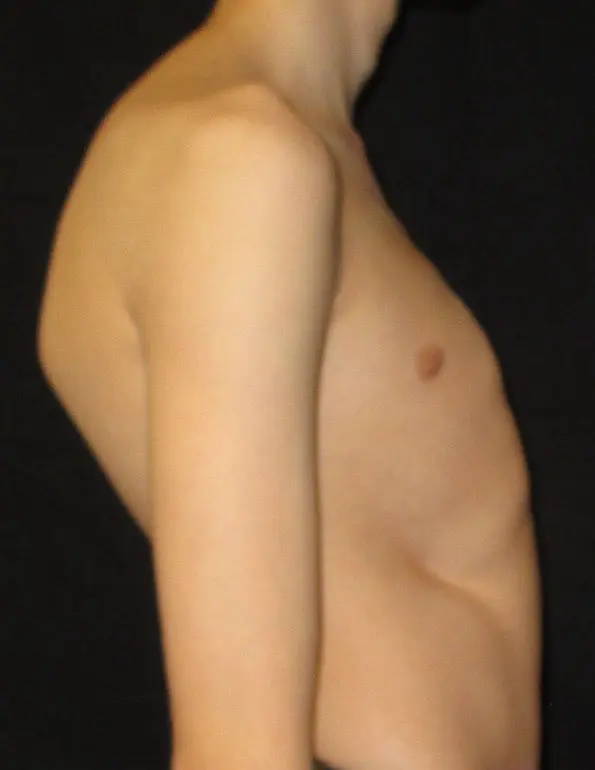
Why posture matters in pectus
Chest wall deformities do not only affect the shape of the chest — they frequently generate secondary postural changes that develop gradually as the body adapts to the altered structure.
In pectus excavatum, the depressed sternum tends to draw the shoulders forward and encourage thoracic kyphosis, producing a characteristic rounded, sunken posture. In pectus carinatum, patients may compensate for the prominence by rounding the shoulders or hunching forward — paradoxically creating a similar silhouette. In mixed and asymmetric presentations, rotational and lateral asymmetry add a further layer of postural complexity.
These postural adaptations are not simply cosmetic. They can affect breathing mechanics, restrict thoracic mobility, contribute to upper back and shoulder discomfort, and — particularly in adolescents — become progressively entrenched if not addressed. A structured physiotherapy programme can interrupt this cycle, reduce secondary postural changes, and support the overall treatment plan.
At a glance
How pectus affects posture
The pattern of postural change varies by deformity type. Understanding which changes are present helps direct the most appropriate physiotherapy focus.
Pectus excavatum
Forward head posture, rounded shoulders, and increased thoracic kyphosis are common. The chest may appear compressed and the ribcage narrow. Inspiratory excursion is often reduced, and patients may breathe more shallowly due to restricted chest wall movement.
Pectus carinatum
Compensatory shoulder rounding and slight forward trunk lean are seen as patients try to minimise the chest prominence. Over time this can produce secondary tightness in the pectoral muscles and weakness in the upper back and scapular stabilisers.
Mixed & asymmetric pectus
Lateral asymmetry and rotational tilt of the chest wall create more complex postural patterns. Uneven shoulder height, trunk rotation and scoliotic-type posture are not uncommon. Assessment should address all planes of movement.
Rib flare
Rib flare is often associated with poor intra-abdominal pressure control and reduced ability to downwardly rotate and posteriorly tilt the lower ribs. Breathing pattern retraining and lower rib control exercises are central to the physiotherapy approach.
Breathing pattern changes
Altered thoracic mechanics in pectus conditions can promote accessory muscle overuse, paradoxical breathing, or upper chest dominance. Diaphragmatic breathing retraining is an important component of the programme across all deformity types.
Psychological impact
Body awareness, self-consciousness and avoidance of activities are common in pectus patients. A structured physiotherapy programme builds confidence and body control, which has benefits extending well beyond the physical changes achieved.
What physiotherapy can and cannot do
Physiotherapy is a valuable part of the pectus treatment pathway, but it is important for patients to have realistic expectations about what it can achieve.
- Reducing secondary postural changes (rounded shoulders, forward head, kyphosis)
- Improving thoracic mobility and chest wall flexibility
- Retraining diaphragmatic and nasal breathing patterns
- Strengthening upper back, scapular stabilisers and core
- Improving rib flare control through abdominal co-ordination
- Supporting non-surgical treatment such as bracing and vacuum bell therapy
- Improving exercise tolerance, confidence and body awareness
- Reducing musculoskeletal discomfort associated with the deformity
- Correct the underlying chest wall deformity itself
- Reverse bony or cartilaginous changes in the sternum or ribs
- Replace bracing, vacuum bell therapy or surgical correction
- Address significant deformity in skeletally mature patients without additional intervention
- Guarantee specific cosmetic outcomes
How physiotherapy fits into the pectus pathway
Physiotherapy is usually most helpful when it is linked to a wider pectus assessment, so that exercises are matched to the patient's deformity, flexibility, symptoms and treatment plan.
Discuss posture at assessment.
View exercise programme30-minute daily exercise programme
This programme has been developed specifically for patients with pectus deformities. It uses an alternating two-day cycle, making it manageable to sustain daily, while covering the key areas of breathing control, postural correction, thoracic mobility and progressive strengthening.
Rib flare control, thoracic mobility & posture
- Deep breathing & rib control — 5 min
- Postural correction (chin retraction, scapular setting) — 5 min
- Supine chest stretch & open book rotation — 10 min
- Dead bug, plank & side plank — 10 min
Chest opening, upper back & strengthening
- Deep breathing & rib control — 5 min
- Postural correction (chin retraction, scapular setting) — 5 min
- Doorway chest stretch — 10 min
- Bent over rows & incline press-up — 10 min
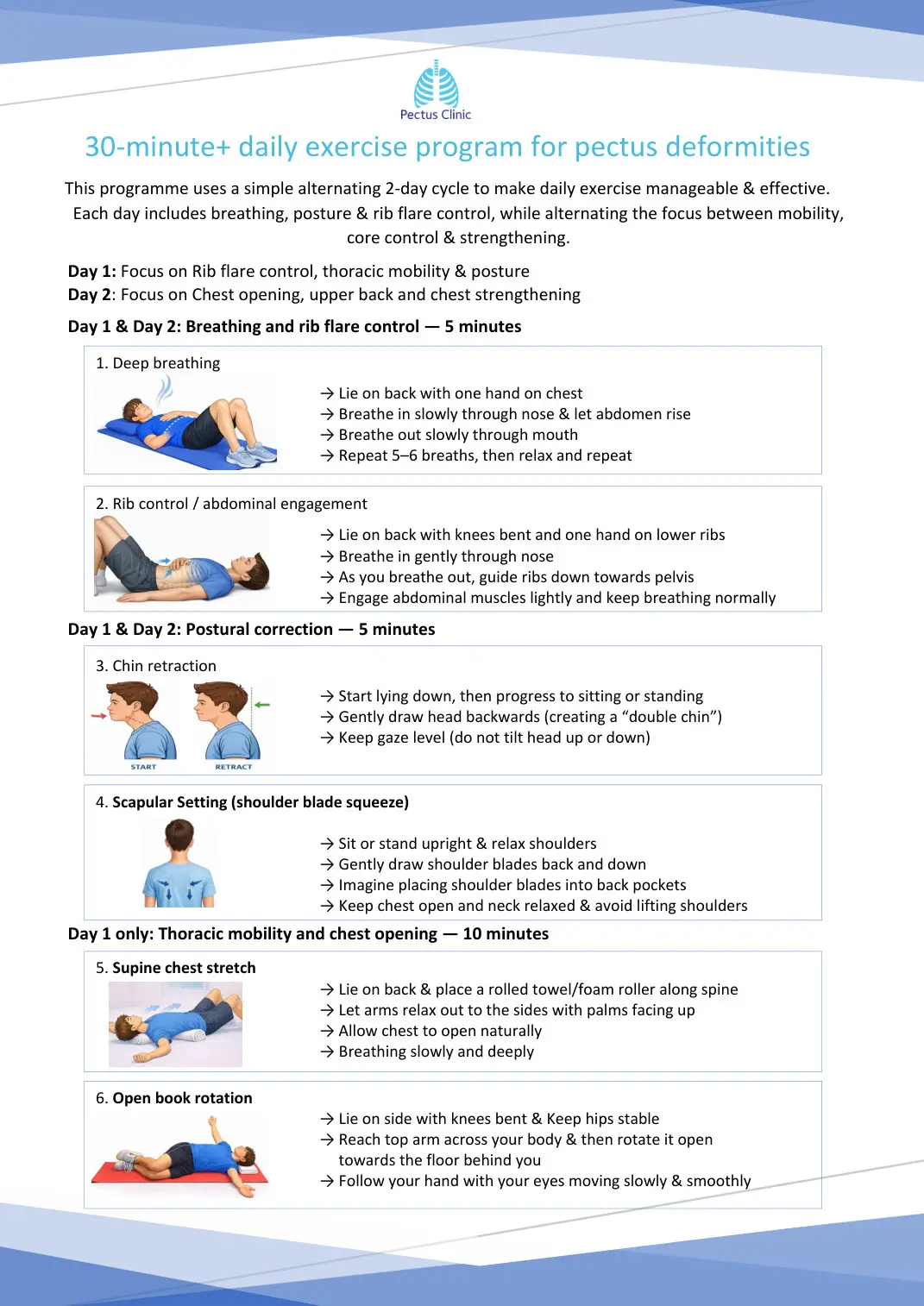
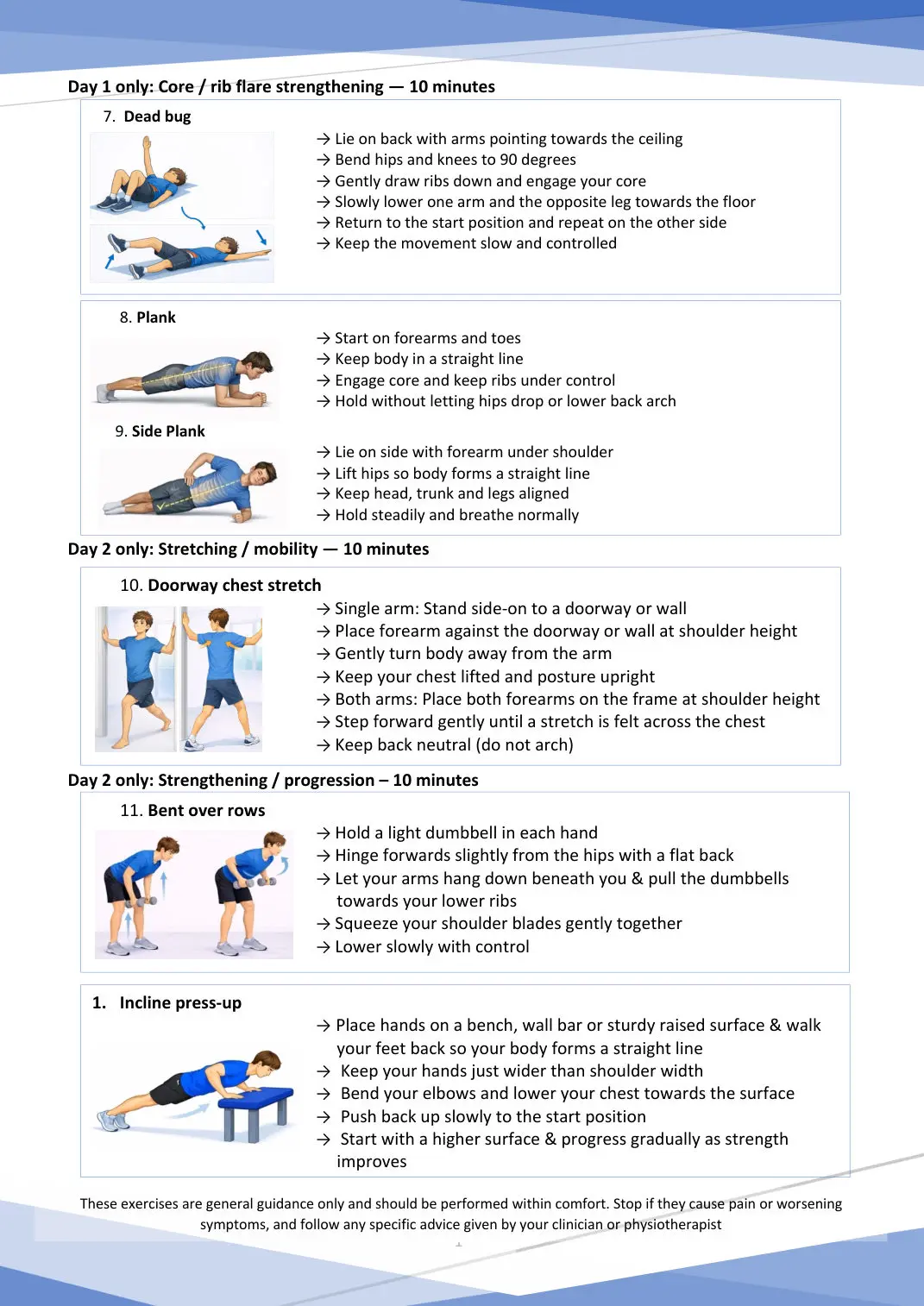
Pectus physiotherapy booklet
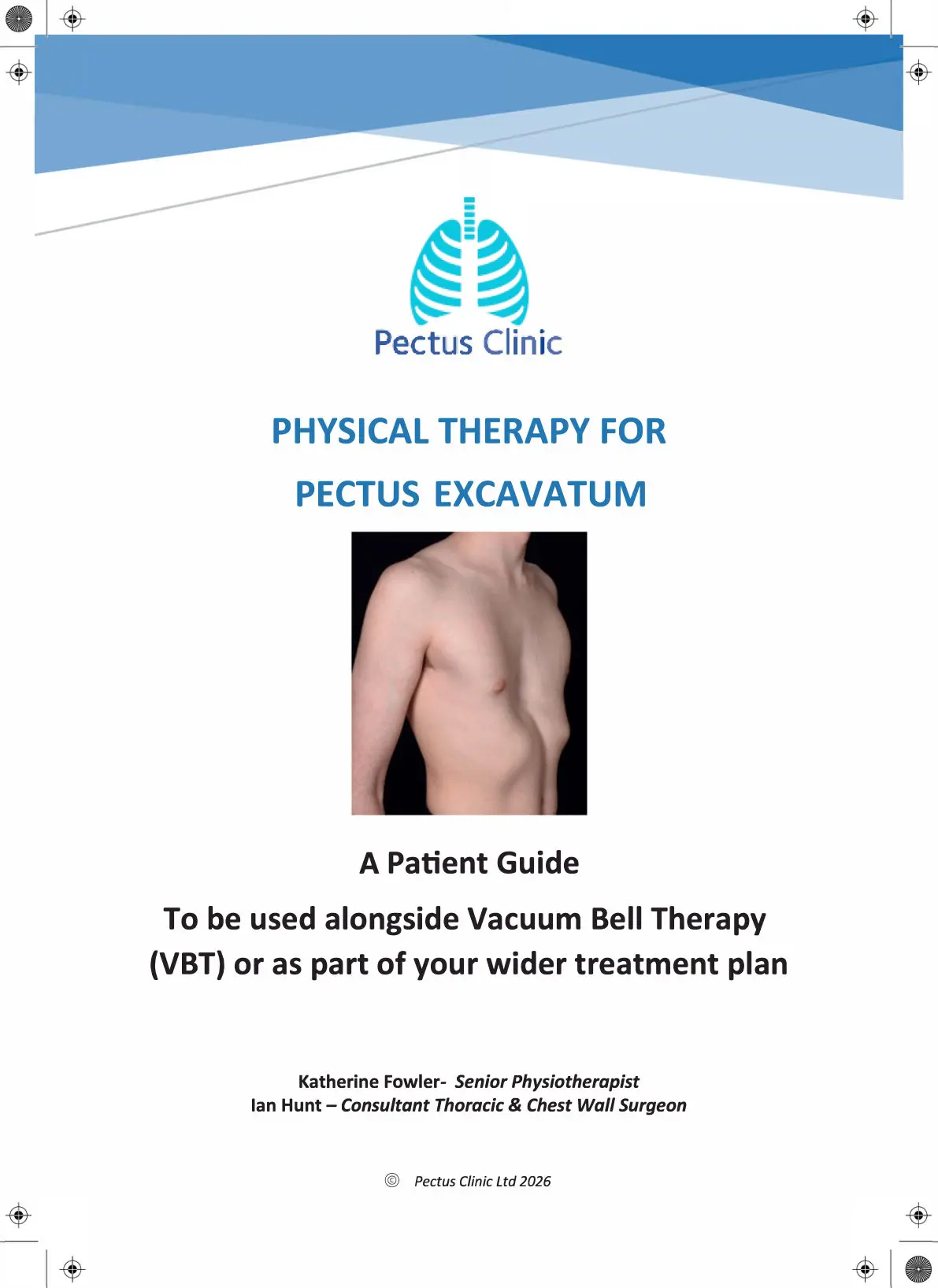
A detailed physiotherapy booklet has been produced for patients with pectus excavatum. It covers the anatomy of the condition, how it affects breathing and posture, the principles of the exercise programme, and guidance on progression. Sample pages are shown below.
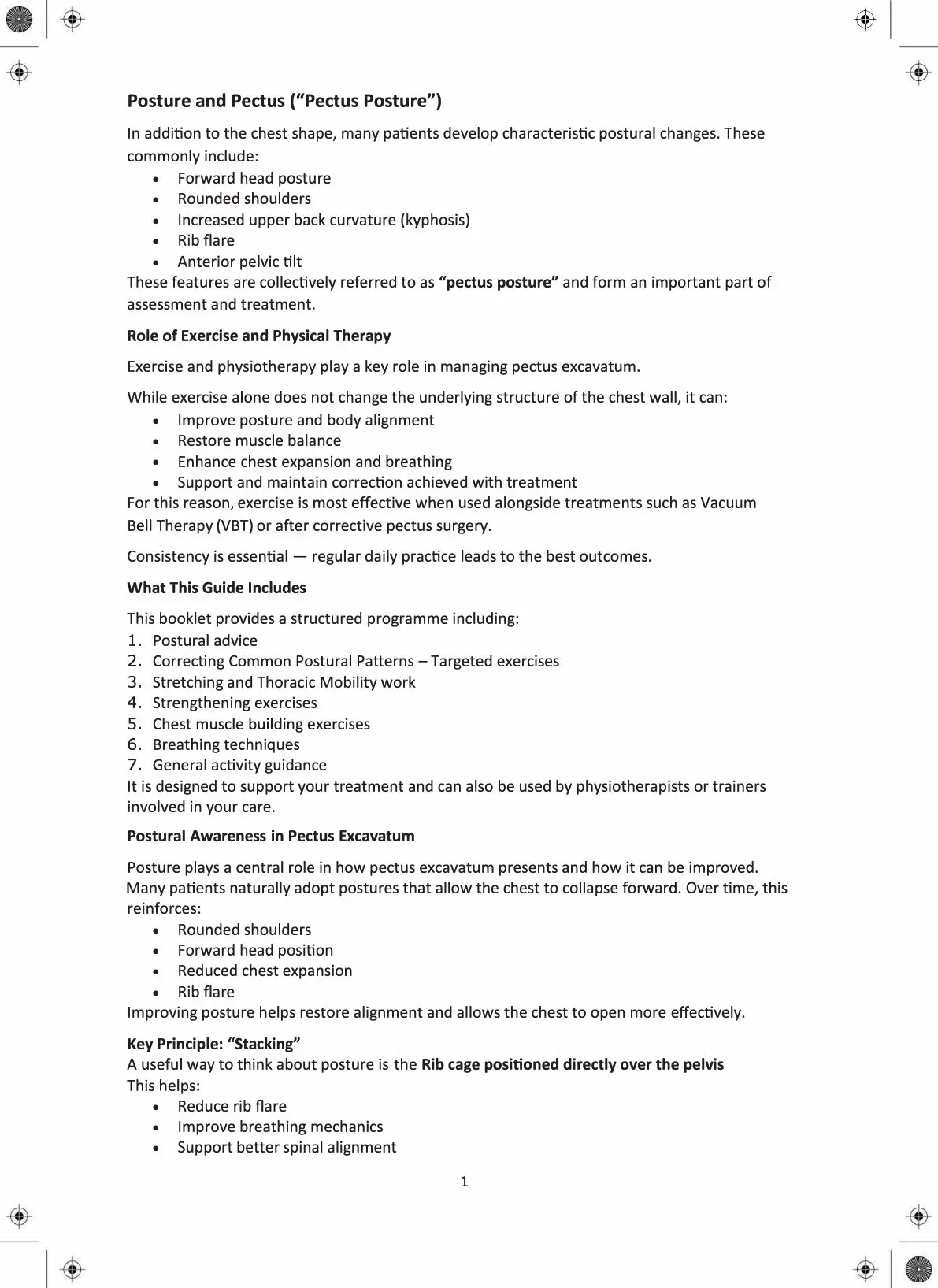
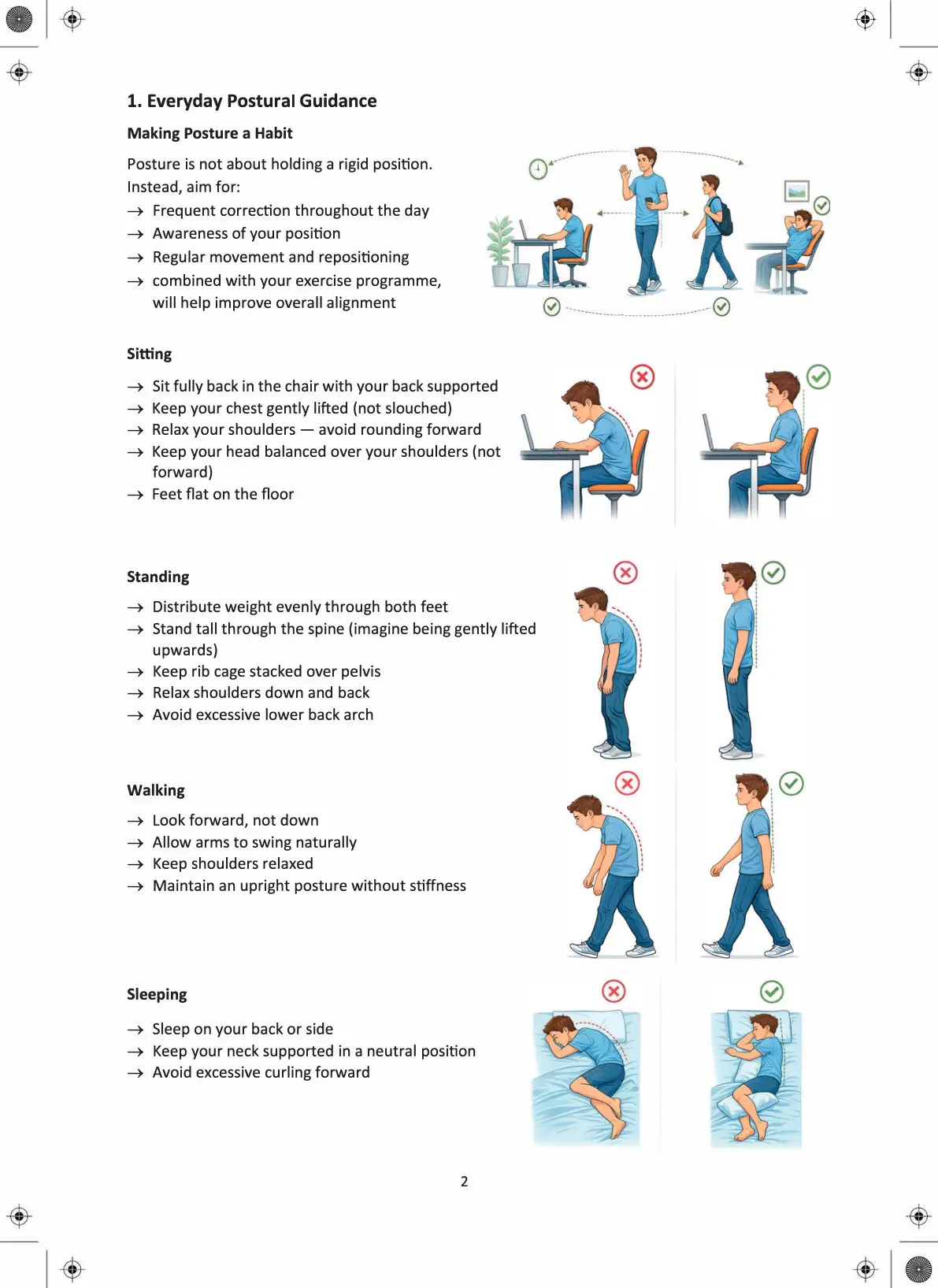
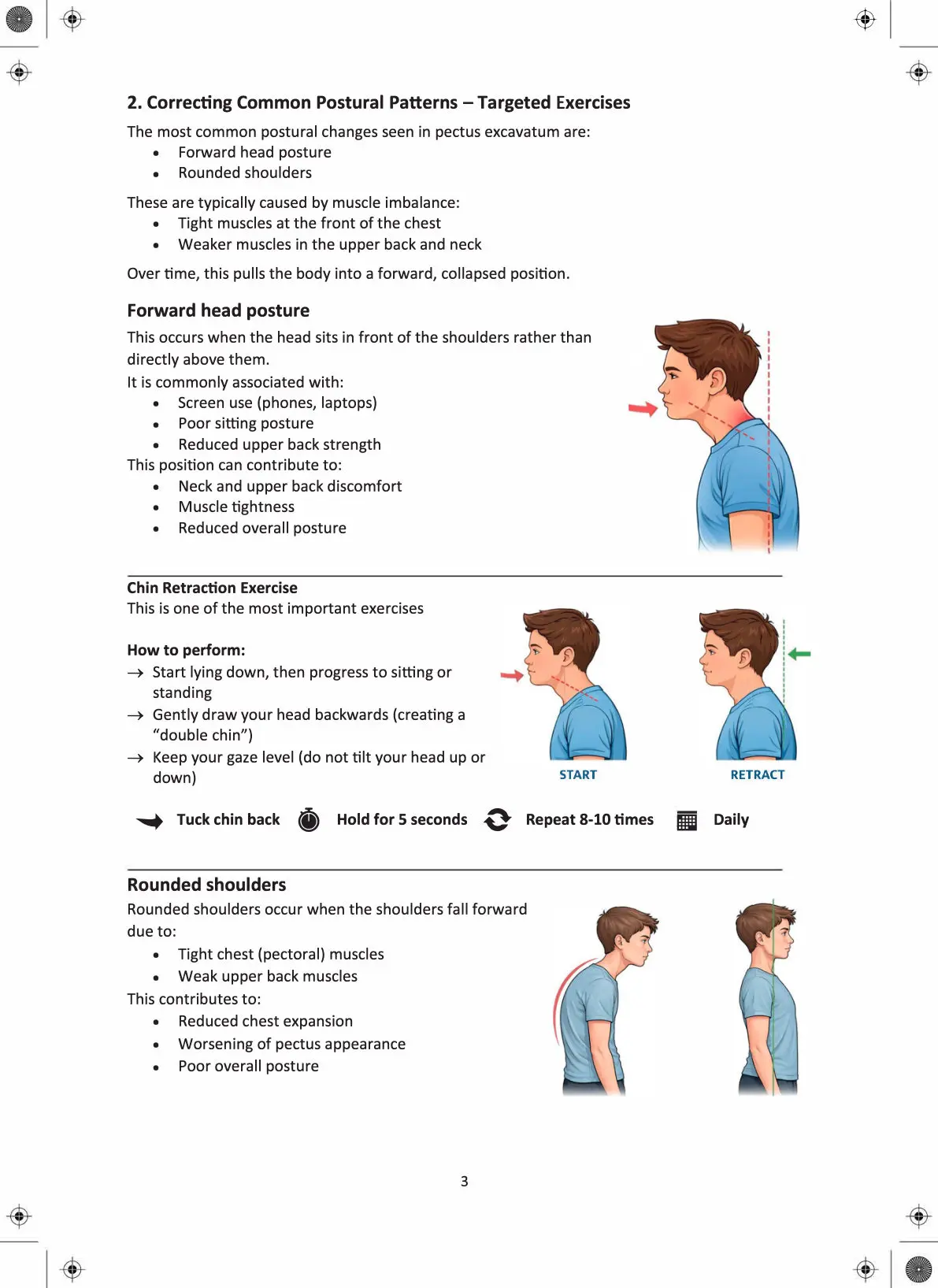
NHS physiotherapy is available and patients can access it via GP referral or, in many areas, by self-referring directly to an NHS musculoskeletal (MSK) physiotherapy service. However, pectus-specific physiotherapy expertise — including breathing retraining, targeted rib flare exercises, and post-operative pectus rehabilitation — is not routinely available within standard NHS MSK services.
Physiotherapy provided through the Pectus Clinic is delivered by practitioners with specific experience in chest wall conditions — covering pectus-specific breathing retraining, postural correction, rib flare management, and pre- and post-operative rehabilitation. Where NHS access is available and appropriate, this clinic can provide a written summary to support onward NHS referral.
Common questions
At what age should physiotherapy start?
There is no minimum age, but physiotherapy tends to be most useful during adolescence, when postural habits, strength and breathing patterns are still developing. Even in adults, a structured programme can reduce secondary postural changes and improve function, though the degree of change achievable in skeletally mature patients is more limited.
Should I do physiotherapy before or after surgery?
Both. Pre-operatively, physiotherapy can optimise posture, breathing mechanics and physical conditioning — all of which support recovery. Post-operatively, a graduated return to exercise and specific breathing exercises are an important part of rehabilitation. The timing and content of each phase is guided by the surgical team.
Can physiotherapy replace bracing or surgery?
No. Physiotherapy addresses the secondary postural and functional consequences of pectus deformity — it does not correct the deformity itself. For patients where the deformity warrants active correction, physiotherapy works alongside rather than instead of bracing, vacuum bell therapy or surgical intervention.
How long does it take to see results?
Improvements in breathing pattern and posture awareness can be noticed within a few weeks of consistent practice. More substantial postural change typically takes three to six months of regular exercise. As with any conditioning programme, the key is consistency — a daily routine sustained over months produces far better results than intermittent effort.
Do I need a referral to a physiotherapist?
Not necessarily, but it is advisable to work with a physiotherapist who understands chest wall conditions, either through a direct referral from your pectus surgeon or a physiotherapist familiar with the specific demands of pectus rehabilitation. Generic physiotherapy programmes designed for back pain or postural problems are often partially applicable but may not address all relevant areas.
Will exercises help with rib flare?
Targeted exercises may improve lower rib control and reduce the visible prominence of rib flare in some patients. The key components are diaphragmatic breathing retraining, abdominal co-activation and learning to downwardly rotate the lower ribs during expiration. These are included in the daily programme and covered in detail in the physiotherapy booklet.
Is the exercise programme suitable for all ages?
The programme is designed for adolescents and adults. Exercises should be performed within comfort, and individual modifications may be needed depending on age, fitness level and the specific deformity. Younger children should exercise under parental supervision, and any concerns should be discussed with the clinical team before starting.
Can physiotherapy help with chest pain or discomfort?
Musculoskeletal discomfort related to postural changes, tight pectoral muscles or intercostal strain can often be improved through a targeted physiotherapy programme. However, chest pain should always be assessed clinically before attributing it to posture or the deformity — particularly if it is new, severe or associated with breathlessness.
Discuss posture and physiotherapy at your assessment
Postural assessment and physiotherapy guidance are part of the initial consultation at the Pectus Clinic. We can provide a structured programme, written resources, and referral to a specialist physiotherapist where appropriate.